
Do you really need a human financial advisor to start investing?
For most beginners, the answer is no.
Robo-advisors build and manage a diversified portfolio for you automatically and cost far less than a human planner.
This post compares the best robo advisors for beginners, including Wealthfront, Betterment, Schwab Intelligent Portfolios, and Fidelity Go, and shows which platform fits your balance, tax needs, and desire for occasional human help.
By the end you’ll know the simplest, cheapest, and most feature-rich pick for your situation.
What a Robo-Advisor Does and How to Open an Account

A robo-advisor builds and manages an investment portfolio for you automatically. Instead of picking stocks yourself or paying thousands for a human wealth manager, you answer a short questionnaire about your goals, timeline, and how you’d react if your money dropped 20 percent in a month. The robo takes your answers, assigns you a portfolio of low-cost ETFs or index funds, and handles rebalancing when markets shift.
Opening an account looks a lot like opening a checking account at a bank. You’ll enter your name, address, Social Security number, and link a bank account. Most platforms ask five to ten questions: “When do you need this money?” “Are you saving for retirement or a house?” “If the market crashes, would you panic-sell or buy more?” The whole process usually takes under ten minutes.
Once you’re approved, you choose how much to invest up front and whether to automate monthly deposits. The robo does the rest. Buying shares, reinvesting dividends, keeping your asset mix on target. You can check your balance anytime on the app, but you don’t have to make a single trade yourself.
Most robos charge between 0 percent and 0.35 percent of your account balance per year. That’s the management fee or advisory fee. It’s separate from the tiny expense ratios inside the ETFs themselves, which typically run 0.03 percent to 0.30 percent. Add those two together and you’re looking at total annual costs between roughly 0.10 percent and 0.60 percent. Far below the 1 percent or more a traditional human advisor would charge.
Ranking Summary: Four Top-Scoring Robo-Advisors

Four platforms earned the highest possible score in a March 2026 review covering more than 60 investment providers: Wealthfront, Schwab Intelligent Portfolios, Betterment, and Fidelity Go. That doesn’t mean they’re identical. Each one is best for a different kind of beginner.
Schwab Intelligent Portfolios charges zero advisory fee and zero commissions, making it the cheapest option if you have at least $5,000 to start. Fidelity Go is free on balances under $25,000 and uses Fidelity Flex funds with no expense ratios, so you pay nothing in management or fund fees until your account crosses that threshold. Betterment charges 0.25 percent but has no account minimum and offers strong tax-loss harvesting and certified financial planner access at higher tiers. Wealthfront also charges 0.25 percent, requires a $500 minimum in some sources (other sources cite $0), and is known for automated tax optimization and a built-in financial planning tool called Path.
The right pick depends on how much you’re starting with, whether you care about tax features, and if you want occasional human help. If you have $10,000 and hate fees, Schwab or Fidelity makes sense. If you have $500 and want tax-loss harvesting, Wealthfront or Betterment will serve you better. If you have $50 and want to start today, Betterment is the easiest door.
Detailed Platform Profiles

Wealthfront
Account minimum: $0 (some older accounts required $500; confirm current terms).
Management fee: 0.25 percent per year.
Account types: taxable brokerage, Traditional IRA, Roth IRA, SEP IRA, 529 college savings.
Ease of use rating: 4.5 out of 5.
Wealthfront was one of the first modern robos and still stands out for combining automated portfolios with a DIY stock-investing feature and a powerful financial planning engine called Path. Path pulls in all your accounts (even ones outside Wealthfront) and projects whether you’re on track for goals like retirement, buying a home, or taking a sabbatical.
The platform uses low-cost index ETFs and automatically rebalances your portfolio when your stocks drift too far from the target mix. Tax-loss harvesting is included on taxable accounts, which means the robo will sell losing positions to offset gains and lower your tax bill. On a $100,000 taxable account, tax-loss harvesting can save you hundreds of dollars a year, depending on market volatility and your tax bracket.
Wealthfront also offers a cash account with a competitive interest rate and no fees, so you can park your emergency fund and investments under one roof. The main downside: you won’t get regular access to a human financial advisor unless your balance is very high. If you’re comfortable being mostly on your own with digital tools, that’s fine. If you want phone calls with a planner, look elsewhere.
Pros:
Low 0.25 percent fee. Strong tax optimization on taxable accounts. Path financial planning pulls in outside accounts. Option to invest in individual stocks alongside the robo portfolio. Cash account with competitive rates.
Cons:
Limited human advisor access at typical balance levels. $500 minimum in some account types (verify current terms). Tax-loss harvesting matters less if your balance is tiny or you’re only using an IRA.
Betterment
Account minimum: $0.
Management fee: 0.25 percent per year (Digital plan), 0.40 percent per year (Premium plan, requires $100,000 minimum and includes unlimited calls with certified financial planners).
Account types: taxable brokerage, Traditional IRA, Roth IRA, SEP IRA, trust accounts.
Ease of use rating: 5 out of 5.
Betterment has been around since 2010 and is the go-to robo for beginners who want goal-based planning and optional human guidance. The onboarding quiz asks about each goal separately (retirement, emergency fund, vacation house) and builds a custom portfolio and timeline for each one. You can have multiple goals in one account, each with its own risk level and target date.
The platform offers fractional shares, so even a $100 deposit buys you a slice of every ETF in your portfolio. Automatic rebalancing keeps your stock-bond mix on target, and tax-loss harvesting is available on taxable accounts once your balance is high enough to make it worthwhile. The exact threshold varies, but it’s typically a few thousand dollars.
Betterment’s Premium tier costs 0.40 percent but gives you unlimited phone or video calls with CFP professionals. If you’re juggling student loans, a 401(k) rollover, and deciding between Roth and Traditional contributions, those calls can be worth the extra 0.15 percent. The Digital plan at 0.25 percent is plenty for most beginners who just want automated investing and don’t need regular human check-ins.
One standout feature: Betterment offers thematic portfolios including Climate Impact, Social Impact, and a portfolio with crypto ETF exposure. If you want your money to reflect your values or you’re curious about Bitcoin exposure without buying coins directly, those options are built in.
Pros:
No account minimum. Goal-based planning with separate timelines and risk settings. Tax-loss harvesting on taxable accounts. Fractional shares. Access to CFP advisors at Premium tier. Thematic and socially responsible portfolio options.
Cons:
Premium tier requires $100,000 minimum and charges 0.40 percent. Tax-loss harvesting on very small balances may not save much. Slightly higher management fee than zero-fee competitors if you don’t value the extra features.
Schwab Intelligent Portfolios
Account minimum: $5,000.
Advisory fee: 0 percent (no management fee, no commissions).
Account types: taxable brokerage, Traditional IRA, Roth IRA.
Ease of use rating: 4 out of 5.
Schwab Intelligent Portfolios is the best choice for cost-sensitive beginners who have at least $5,000 to invest. The platform charges zero advisory fee and zero commissions, so the only cost you pay is the tiny expense ratio inside each ETF (typically 0.05 percent to 0.15 percent). On a $10,000 account, that means roughly $5 to $15 per year in total costs. Less than the price of lunch.
The catch: Schwab automatically allocates a slice of your portfolio to a cash position held in an FDIC-insured account. The exact percentage depends on your risk profile, but it’s usually between 6 percent and 30 percent. Cash earns interest but historically returns less than stocks or bonds, so this allocation can slightly lower your long-term growth compared to a fully invested portfolio. Schwab says the cash cushion adds stability and lets you rebalance without selling at a loss, which is true, but it also reduces your market exposure.
Tax-loss harvesting is available once your balance hits $50,000, so it’s not useful for smaller accounts. Customer support is strong. 24/7 live chat and access to Schwab’s network of branch offices if you want face-to-face help.
If you’re a beginner with $5,000 or more who wants to pay zero management fees and doesn’t mind the required cash allocation, Schwab is hard to beat. If you have less than $5,000 or you want every dollar invested in the market, pick a different platform.
Pros:
Zero advisory fees and zero commissions. Access to more than 50 ETFs. 24/7 live chat. FDIC-insured cash component adds safety. Backed by a major, long-established brokerage.
Cons:
$5,000 minimum. Required cash allocation lowers immediate market exposure. Tax-loss harvesting only available at $50,000+. Premium human advisor tier costs extra.
Fidelity Go
Account minimum: $10 to start investing (no advisory fee on balances under $25,000).
Advisory fee: 0 percent on balances under $25,000, 0.35 percent per year on balances $25,000 and above.
Account types: taxable brokerage, Traditional IRA, Roth IRA.
Ease of use rating: 4 out of 5.
Fidelity Go is the simplest, cheapest entry point for absolute beginners. You can open an account with as little as $10, and Fidelity charges zero advisory fee until your balance crosses $25,000. The portfolios use Fidelity Flex mutual funds and low-cost index funds, many of which carry zero expense ratios. That means you pay nothing (no management fee, no fund fee) on your first $25,000.
Once you hit $25,001, the 0.35 percent advisory fee kicks in. On $30,000, that’s $105 per year. On $50,000, it’s $175 per year. The fee is higher than Betterment or Wealthfront at that level, but the free tier below $25,000 is unmatched.
Fidelity Go also offers unlimited 30-minute coaching calls with a Fidelity advisor, even on small balances. If you have basic questions about Roth versus Traditional IRA contributions or how to set up automatic deposits, those calls can be very helpful. The platform doesn’t offer automated tax-loss harvesting, so if that feature matters to you, choose Betterment or Wealthfront instead.
The interface is clean and straightforward. Onboarding takes about five minutes. You link your bank, answer a short risk questionnaire, and Fidelity assigns you a portfolio. Automatic rebalancing and dividend reinvestment happen in the background.
Pros:
Free management on balances under $25,000. Fidelity Flex funds with zero expense ratios. $10 minimum to start investing. Unlimited 30-minute advisor coaching calls. Backed by a major brokerage with decades of history.
Cons:
Advisory fee jumps to 0.35 percent above $25,000. No automated tax-loss harvesting. Fewer advanced features than competitors at higher balances.
Vanguard Digital Advisor
Account minimum: $100 (requires an existing Vanguard account).
Advisory fee: approximately 0.15 percent per year (plus underlying Vanguard ETF expense ratios, so total cost typically 0.20 percent to 0.30 percent).
Account types: taxable brokerage, Traditional IRA, Roth IRA.
Ease of use rating: 4 out of 5.
Vanguard Digital Advisor is built for investors who want the lowest possible total cost and are happy using only Vanguard ETFs. The advisory fee is roughly 0.15 percent, and the ETFs inside the portfolio typically charge 0.03 percent to 0.10 percent, so your all-in cost runs 0.20 percent to 0.30 percent per year. On $10,000, that’s $20 to $30 annually. Less than one month of a typical streaming subscription.
You need an existing Vanguard account to enroll, and the platform offers a promotional first 90 days of investment management in some periods (confirm current offers). The portfolios are simple and use only Vanguard index ETFs, which means you get broad market exposure at rock-bottom costs but very limited customization. There’s no option for thematic portfolios, crypto exposure, or individual stock picks. If you want plain-vanilla, low-cost index investing and nothing else, that’s perfect. If you want more choice, look elsewhere.
Human advisor access is not included in the basic Digital Advisor service. Vanguard does offer higher-tier advisory services with human planners, but those require much larger minimums and higher fees. The digital-only tier is a set-it-and-forget-it option for people who trust Vanguard’s index philosophy and don’t need hand-holding.
Pros:
Very low total cost (around 0.20 percent to 0.30 percent all in). Uses only low-cost Vanguard ETFs. Backed by Vanguard’s decades of index-fund leadership. $100 minimum if you already have a Vanguard account.
Cons:
Requires an existing Vanguard account. Limited portfolio customization. No human advisors in the basic service. Fewer advanced features like tax-loss harvesting or goal-based planning tools.
SoFi Robo Investing
Account minimum: $0.
Management fee: 0 percent for basic automated portfolios (SoFi earns revenue from other services and underlying fund fees).
Account types: taxable brokerage, Traditional IRA, Roth IRA, SEP IRA.
Ease of use rating: 5 out of 5.
SoFi Automated Investing is free. You pay no management fee at the base tier, and the platform includes one meeting with a financial advisor for certain account types. If you want expanded advisor access, you can pay for SoFi Plus, which bundles unlimited advisor calls with other perks like higher interest on checking and savings accounts and an IRA match on contributions.
The portfolios are straightforward. Low-cost ETFs across stocks and bonds, with automatic rebalancing. SoFi also offers automatic spare-change investing (round-ups on debit-card purchases) and cash-back rewards at select retailers, which can help beginners build the habit of saving. Onboarding is mobile-first and takes under ten minutes.
The downside: SoFi’s robo portfolios are simpler than Betterment or Wealthfront. You won’t get advanced tax-loss harvesting or as many portfolio options. If your goal is basic, low-cost automation and you like the idea of bundling investing with high-interest banking and occasional advisor calls, SoFi is a strong pick. If you want deep tax optimization or thematic portfolios, choose a competitor.
Pros:
Zero management fee. No account minimum. One advisor meeting included at base tier. Automatic round-ups and retailer cash back. High-interest checking and savings integration. Clean mobile experience.
Cons:
Simpler portfolios with fewer customization options. No automated tax-loss harvesting. Expanded advisor access requires paid SoFi Plus membership. Monthly fees can add up on small balances if you subscribe to premium tiers.
Acorns
Account minimum: $5.
Pricing: $3 per month (Personal tier) or $5 per month (Family tier) as of mid-2024.
Account types: taxable brokerage, Traditional IRA, Roth IRA (available under plan tiers).
Ease of use rating: 5 out of 5.
Acorns is built for absolute beginners who struggle to save. The app automatically rounds up every debit-card purchase to the nearest dollar and invests the spare change. Buy a $3.50 coffee, and Acorns invests $0.50. Over a month, those nickels and dimes add up to real money.
The $3-per-month Personal tier includes automated investing, retirement accounts, and a checking account with a debit card. The $5-per-month Family tier adds investment accounts for kids and expanded educational content. The flat monthly fee is simple, but it’s punishing on tiny balances. On a $500 account, $3 per month equals 7.2 percent annually. On $2,000, it’s 1.8 percent. On $10,000, it drops to 0.36 percent, which is competitive.
Acorns offers five pre-built portfolios ranging from conservative (more bonds) to aggressive (more stocks). You can’t customize the mix or pick individual funds. The app includes short articles and simple planning tools, but nothing as robust as Betterment or Wealthfront. There’s no tax-loss harvesting and no human advisor access.
If you’re brand new to investing, have trouble saving, and want an app that automates everything, Acorns is a great training-wheels option. Once your balance hits $5,000 or $10,000, compare the flat fee to percentage-based competitors and consider switching to save money.
Pros:
Automatic round-ups make saving effortless. $5 minimum to start. Very beginner-friendly interface. Family tier includes investment accounts for kids. Checking account and debit card included.
Cons:
Flat monthly fees ($3 or $5) are expensive on small balances. Limited portfolio customization. No tax-loss harvesting. No human advisor access. $35 fee per ETF if you transfer to another broker.
Robinhood Strategies
Robinhood Strategies is listed among top robo options in the March 2026 review but fewer platform-specific details were provided. Robinhood is best known for commission-free stock and crypto trading, and Strategies is its automated portfolio feature. Expect simple, low-cost ETF portfolios with automatic rebalancing. The platform is mobile-first and appeals to younger, tech-savvy beginners who already use Robinhood for other investing. Confirm current minimums, fees, and available account types on Robinhood’s site before opening an account.
Ally Invest Robo Portfolios
Ally Invest Robo Portfolios also appears in the top-picks list but with limited detail in the source material. Ally is primarily a bank, and the robo offering is designed for customers who want to consolidate checking, savings, and investing under one institution. Expect competitive fees, straightforward portfolios, and integration with Ally’s banking products. Verify current advisory fees, minimums, and tax features directly with Ally.
How Robo-Advisors Charge
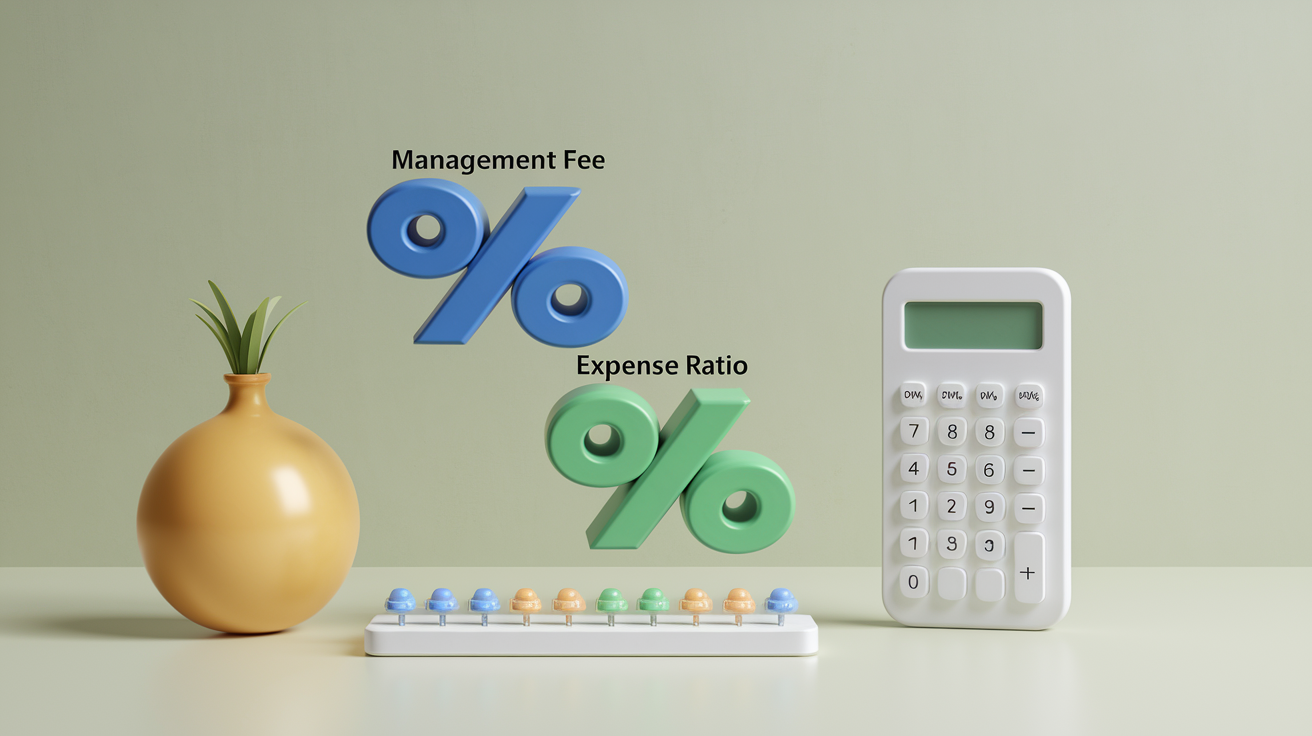
Robos make money in two main ways: management fees and revenue from the funds inside your portfolio.
The management fee (also called the advisory fee) is a percentage of your account balance charged each year. A 0.25 percent management fee on $1,000 equals $2.50 per year. On $100,000, it’s $250 per year. The fee is typically deducted from your account every quarter, so you pay roughly $0.62 per quarter on that $1,000 balance. You won’t see a bill. The money just disappears from your account automatically.
The expense ratio is a separate fee inside each ETF or mutual fund. The fund company (Vanguard, BlackRock, State Street) charges this fee to cover the cost of managing the fund. Expense ratios usually range from 0.03 percent to 0.30 percent per year. A fund with a 0.10 percent expense ratio costs you $1 per year on every $1,000 invested. You never see this fee either. It’s deducted from the fund’s returns before you receive them.
Add the two together to get your total cost. If your robo charges 0.25 percent and the ETFs inside average 0.10 percent, your all-in cost is 0.35 percent per year. On $10,000, that’s $35 annually.
Some robos charge zero management fees. Schwab Intelligent Portfolios and SoFi Automated Investing both advertise $0 advisory fees. They earn revenue from other services. Schwab makes money on the cash allocation in your portfolio, and SoFi earns from lending, premium memberships, and payment-for-order-flow on trades. Fidelity Go charges zero on balances under $25,000 and uses Fidelity Flex funds with zero expense ratios, so you literally pay nothing in fees until you cross that threshold.
Flat monthly fees (like Acorns’ $3 or $5 per month) work differently. They’re simple and predictable, but they hurt small accounts. On a $500 balance, $3 per month is $36 per year, or 7.2 percent of your money. On $5,000, it’s $36 per year, or 0.72 percent. Once your balance is high enough, percentage-based fees usually cost less than flat fees.
Factors to Consider When Choosing

Management Fees
Compare the advisory fee across platforms. Zero percent (Schwab, SoFi, Fidelity Go under $25k) is obviously cheapest, but make sure you’re not giving up features you need. A 0.25 percent fee (Betterment, Wealthfront) is still very low compared to the 1 percent a human advisor charges, and you might get tax-loss harvesting, goal planning, or human advisor access in return.
On small balances, percentage fees are tiny in dollar terms. A 0.25 percent fee on $2,000 is $5 per year. On $100,000, it’s $250 per year. At that level, saving 0.10 percent by switching platforms saves you $100 annually, which starts to matter.
Expense Ratios
Look at the ETFs or mutual funds the robo uses. Vanguard, Schwab, and Fidelity index funds typically charge 0.03 percent to 0.10 percent. Actively managed funds or niche ETFs can charge 0.30 percent or more. A robo that charges 0 percent advisory fee but uses expensive funds can cost you more than a robo that charges 0.25 percent and uses dirt-cheap index funds.
Fidelity Go’s Flex funds carry zero expense ratios, which is why the platform can offer completely free investing under $25,000. Always add advisory fee plus average expense ratio to find the true total cost.
Account Types
Make sure the robo offers the account type you need. Almost every platform supports taxable brokerage accounts, Traditional IRAs, and Roth IRAs. Fewer offer SEP IRAs (for self-employed), trust accounts, or 529 college-savings plans.
If you’re rolling over a 401(k) from an old job, confirm the robo accepts rollovers and doesn’t charge a fee. If you want to save for a kid’s college, check whether 529 plans are available. Wealthfront offers them, many others don’t.
Rebalancing
All major robos rebalance automatically, but the triggers vary. Some rebalance whenever your stock-bond mix drifts more than 5 percent from the target. Others rebalance on a schedule (quarterly or annually). A few rebalance continuously in tiny increments as you add money.
For beginners, the differences don’t matter much. Any automatic rebalancing is better than doing it yourself and forgetting.
Human Advisor Access
Decide how much human help you want. Platforms fall into four buckets:
- No human access: Vanguard Digital Advisor, Schwab Intelligent Portfolios (base tier), M1 Finance.
- Limited free access: SoFi (one meeting included at base tier), Fidelity Go (unlimited 30-minute coaching calls).
- Paid premium tiers: Betterment Premium ($100k minimum, 0.40 percent fee, unlimited CFP calls), Schwab Premium (extra cost for dedicated advisor).
- Fast phone support: Wealthfront (specialists answer in under 10 seconds).
If you’re confident making decisions on your own, skip the human access and save the fee. If you have complex questions about tax strategy, retirement accounts, or estate planning, paying 0.40 percent for unlimited CFP access can be worth it.
Trust & Methodology Summary
The March 2026 review analyzed more than 60 investment account providers. Reviewers cited more than 50 years of combined finance-writing experience and conducted hands-on testing of platforms. Each robo was scored on more than 20 factors: account minimums, management fees, expense ratios, available account types, rebalancing methods, tax-loss harvesting, human advisor access, mobile and web usability, educational resources, and customer support quality. Final star ratings ranged from 1 to 5, based on questionnaires, live demonstrations, and real-money testing.
Most robos operate as SEC-registered investment advisers. Your money is held at a custodian (a major brokerage like Schwab, Fidelity, or Apex Clearing) and protected by SIPC insurance up to $500,000 (including $250,000 in cash). SIPC does not protect you from market losses. If your portfolio drops 20 percent, you lose 20 percent. SIPC only covers you if the brokerage itself goes bankrupt and your assets disappear.
Investments managed by robos are not FDIC insured (except for any cash allocations held in FDIC-insured bank accounts). Stocks and bonds can lose value, and past performance does not guarantee future returns. Always verify that the platform is registered with the SEC and that the custodian is a member of FINRA and SIPC before you invest.
Some platforms featured in the review are partners who compensate the publisher. This influenced product visibility but not the scoring methodology. Readers should confirm current fees, minimums, and terms on each provider’s website. Offers and features change, and the March 2026 snapshot may be out of date by the time you read this.
Actionable Recommendations Based on Beginner Needs

You Have Less Than $1,000 and Want to Start Today
Pick Betterment or Acorns. Betterment has no minimum and charges 0.25 percent, so you pay about $2.50 per year on $1,000. Acorns charges $3 per month ($36 per year), which is higher, but the automatic round-ups make it easier to save if you struggle with discipline. On balances under $1,000, the fee difference is only a few dollars, so choose based on whether you value automation (Acorns) or lower cost (Betterment).
You Have $3,000 to $5,000 and Want the Lowest Total Cost
Pick Vanguard Digital Advisor (if you have a Vanguard account) or Fidelity Go. Vanguard charges roughly 0.15 percent advisory fee plus 0.05 percent to 0.10 percent in fund fees, so total cost is around 0.20 percent to 0.25 percent. Cheaper than almost any competitor. Fidelity Go is free under $25,000, so you pay zero. Both are excellent for cost-sensitive beginners.
You Have $5,000 or More and Hate Paying Fees
Pick Schwab Intelligent Portfolios. Zero advisory fee, zero commissions, and ETF expense ratios around 0.05 percent to 0.15 percent. Total cost: roughly $5 to $15 per year on $10,000. The required cash allocation lowers your market exposure slightly, but the fee savings are real.
You Want Tax-Loss Harvesting and Don’t Mind Paying a Small Fee
Pick Wealthfront or Betterment. Both charge 0.25 percent and offer automated tax-loss harvesting on taxable accounts. Wealthfront requires a $500 minimum in some cases, Betterment has no minimum. Tax-loss harvesting can save you hundreds of dollars per year on a $50,000 taxable account, which easily offsets the management fee.
You Want Goal-Based Planning and Human Advisor Access
Pick Betterment Premium (if you have $100,000) or Fidelity Go (if you have less). Betterment Premium charges 0.40 percent but includes unlimited calls with certified financial planners. Fidelity Go is free under $25,000 and offers unlimited 30-minute coaching calls with Fidelity advisors, which is enough for basic questions about IRA contributions or setting up auto-deposits.
You Want to Consolidate Banking and Investing
Pick SoFi Automated Investing (if you want high-interest checking and savings alongside free robo investing) or U.S. Bank Automated Investor (if you’re already a U.S. Bank customer). SoFi bundles zero-fee robo portfolios with competitive savings rates, round-ups, and retailer cash back. U.S. Bank requires you to be a customer but offers the convenience of one institution for everything.
You Want to Learn Investing Basics and Build Saving Habits
Pick Fidelity Go (for structured coaching) or Acorns (for gamified saving). Fidelity Go’s unlimited 30-minute advisor calls help you learn as you go, and the platform is free under $25,000. Acorns’ automatic round-ups and kid-focused Family tier turn saving into a habit, which is often the hardest part for beginners.
Final Words
You’ve walked through the key steps: compare fees and minimums, match portfolios to your risk, check tax features, and test the signup flow. The practical tips showed how each tradeoff affects real dollars and peace of mind.
If you carry a balance or want full control, a DIY approach might beat a robo. But for most beginners, the time-savings and low fees make robo-advisors a smart start.
Try a couple with small amounts and see which feels right — the best robo advisors for beginners can make investing simple and steady.
FAQ
Q: What is the best beginner robo-advisor? Which robo-advisor is the best?
A: The best robo-advisor for beginners is often Betterment or Wealthfront, depending on goals, because both offer low fees, simple setup, automated rebalancing, and clear goal-based tools that make investing easier.
Q: Are robo-advisors good for beginners?
A: Robo-advisors are good for beginners because they automate portfolio building, use low-cost ETFs, handle rebalancing and often tax-loss harvesting, and need little time or expertise to manage.
Q: How much money do I need to start with a robo-advisor?
A: The amount you need to start with a robo-advisor is usually between $0 and $500 for many providers; some require $500 to $3,000, so pick a platform that fits your budget and investing plan.
