
What if the easiest way to beat most fund managers is to stop trying to beat them?
Low-cost index funds do exactly that: they buy the market, keep fees tiny, and let compounding do the heavy lifting.
Paying 1% instead of 0.03% can shave tens of thousands off a typical 30-year investment.
This guide explains the why and the how: expense ratios, which indexes to pick, top providers, and a step-by-step plan to start.
No hype. Just numbers and clear choices so you can build wealth simply.
Comprehensive Overview of Low‑Cost Index Fund Investing

An index fund is a mutual fund or ETF built to track a specific market index. Think the S&P 500 or the Wilshire 5000 Total Market Index. Instead of paying stock pickers to hunt for winners, the fund just buys the same securities that make up the index, in the same proportions. That’s it. The straightforward approach cuts overhead, drops fees, and wipes out the risk of a manager making expensive bets that blow up.
Low-cost index funds matter because fees compound just as hard as returns. When you pay an extra 0.9 percent in annual fees, you’re not just losing $90 on a $10,000 investment every year. You’re losing the future growth on that $90 for decades. The gap between a 0.03 percent expense ratio and a 1.0 percent expense ratio on the same investment over thirty years can be tens of thousands of dollars. That’s money you keep, or money that evaporates into the fund company’s pockets.
Index funds fit perfectly into passive investing because they need almost no ongoing decisions. You buy the market, hold it, reinvest dividends, and let the economy do the work. You don’t try to predict earnings, time corrections, or chase last year’s winners. You just own thousands of companies at once and capture their average long term growth. For most investors, that average beats most active managers over any meaningful time horizon.
Key advantages of low cost index fund investing:
- Ultra low fees (often 0.02% to 0.20%) vs active funds charging 0.5% to 2.0%.
- Broad diversification across hundreds or thousands of holdings, cutting company specific risk.
- Transparent holdings. You always know what you own.
- Historically strong performance. The majority of active funds underperform their benchmark over ten or twenty years.
- No manager risk. No need to worry about a star stock picker leaving or making a catastrophic call.
- Tax efficiency, especially in ETF structures that minimize capital gains distributions.
Understanding Expense Ratios and Why Low Costs Drive Higher Returns
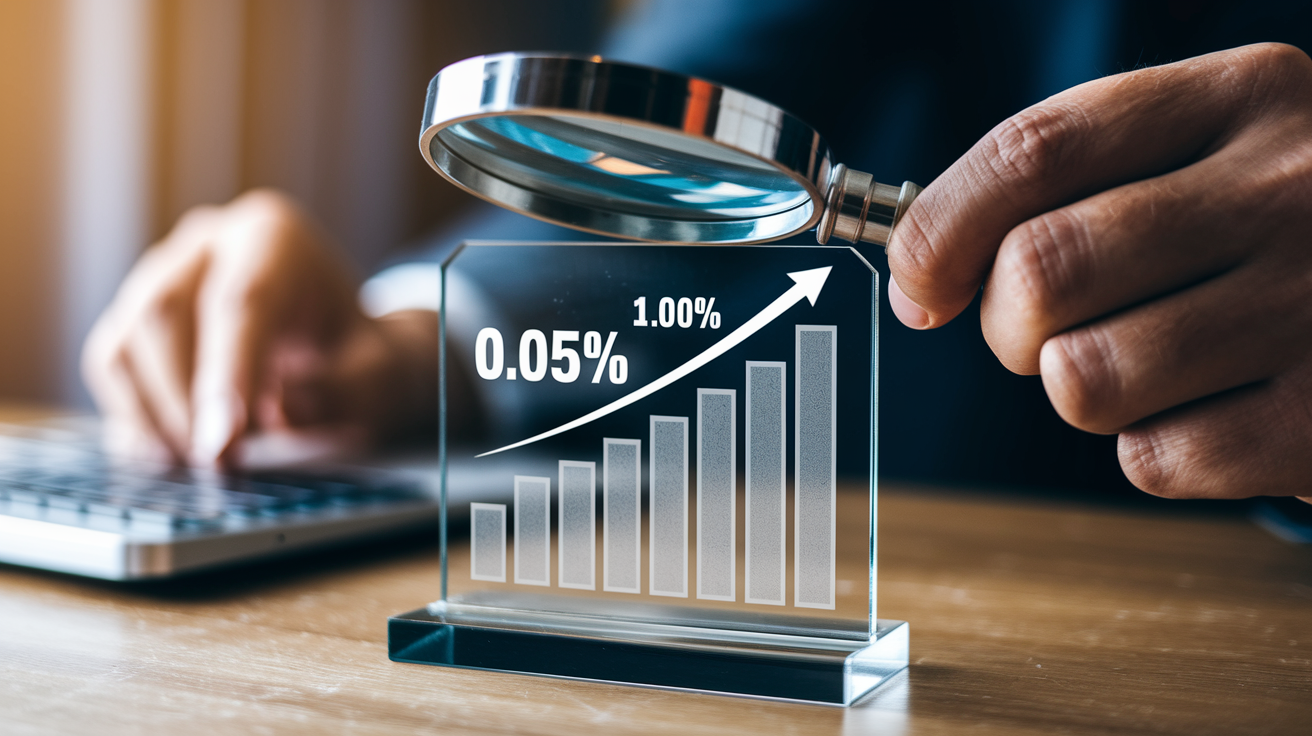
Expense ratios measure the annual fee you pay as a percentage of your fund balance. A 0.05 percent expense ratio means you pay five dollars per year on every ten thousand dollars invested. A 1.0 percent ratio takes one hundred dollars. That spread might feel small on day one, but it’s the silent thief that keeps stealing every single year, on an ever larger balance if your account grows.
Here’s the math that makes low costs non negotiable. $10,000 invested at a 7 percent annual return for thirty years becomes approximately $72,000 if you pay a 0.1 percent fee each year. The same $10,000 at 7 percent, but with a 1.0 percent annual fee, becomes approximately $57,000. The difference (roughly $15,000) didn’t go to better research or outperformance. It went straight to the fund company. The kicker? Many active funds charge those higher fees and still underperform, so you pay more to get less.
Fee impact example over 30 years:
- $10,000 initial investment at 7% average annual return.
- With a 0.05% fee: ending balance around $73,500.
- With a 0.10% fee: ending balance around $72,000.
- With a 1.00% fee: ending balance around $57,000.
- Cumulative cost of high fees: $15,000 to $16,000 in lost wealth on a single lump sum.
Comparing the Largest Low‑Cost Index Fund Providers
Three providers dominate the low cost index fund space: Vanguard, Fidelity, and Schwab. All three offer rock bottom expense ratios, commission free ETF trades, and enough fund choices to build a complete portfolio. The real differences come down to account minimums, mutual fund share classes, and platform features like fractional shares or automatic investing tools.
Vanguard pioneered index investing and still offers some of the lowest expense ratios in the industry, especially on total market and international funds. Many Vanguard Admiral class mutual funds require a $3,000 minimum investment, but their ETFs (like VTI and VOO) have no minimums and trade commission free on most major brokerages. Fidelity and Schwab both undercut Vanguard on a few fronts. Fidelity offers zero fee index funds (FZROX, FNILX) and $0 minimums on many mutual funds. Schwab’s broad market ETFs match Vanguard’s expense ratios and carry no purchase minimums. All three platforms support automatic investing, dividend reinvestment, and fractional share purchases for ETFs.
| Provider | Example Fund | Expense Ratio |
|---|---|---|
| Vanguard | VTI (Total Stock Market ETF) | 0.03% |
| Vanguard | VOO (S&P 500 ETF) | 0.03% |
| Fidelity | FXAIX (S&P 500 Index) | 0.015% |
| Fidelity | FZROX (ZERO Total Market) | 0.00% |
| Schwab | SCHB (U.S. Broad Market ETF) | 0.03% |
| Schwab | SWTSX (Total Stock Market) | 0.03% |
Choosing the Right Index: Market Segments, Styles, and Risk Levels
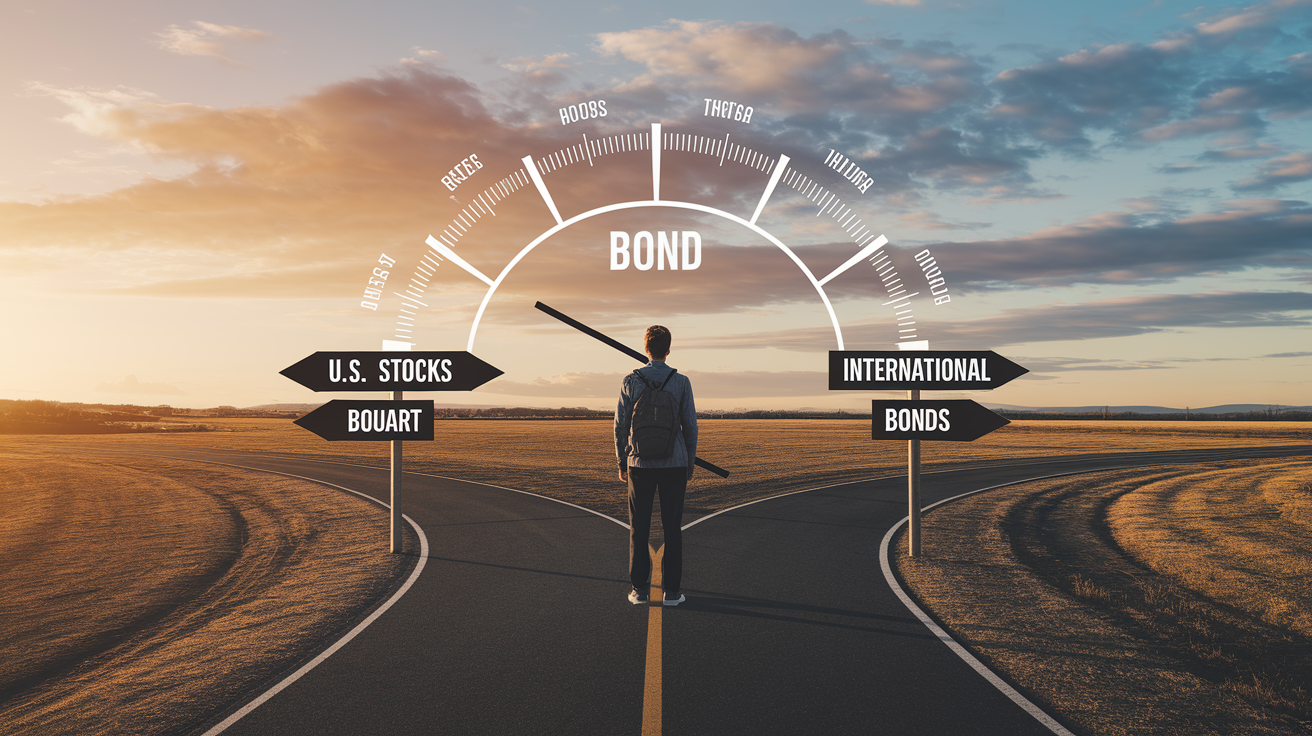
The index you choose determines your risk, your geographic exposure, and your potential return. A total U.S. stock market index gives you exposure to over three thousand companies, from massive tech giants to tiny industrial firms. An S&P 500 index narrows that to the five hundred largest public companies. An international index covers developed and emerging markets outside the United States. A bond index tracks investment grade debt. Each index captures a different slice of the economy, and your job is to match that slice to your timeline, risk tolerance, and goals.
Selection criteria should start with your time horizon. If you’re thirty years from retirement, you can handle short term volatility and concentrate more on stocks (domestic and international). If you’re five years from needing the money, you’ll want more bonds to smooth out the ride. Beyond that, think about geography. Do you want global diversification, or are you comfortable with heavy U.S. exposure? Company size matters too. Large cap stability vs small cap growth potential. And asset type: stocks, bonds, or alternatives like REITs. Industry or sector indexes (like clean energy or technology) can add targeted exposure, but they also add concentration risk.
Risk tolerance isn’t just a quiz result. It’s how you’ll actually feel when the market drops 10 percent in a month. Large cap indexes like the S&P 500 are less volatile than small cap indexes like the Russell 2000. Bond indexes reduce volatility further but cap your long term upside. If you panic sell during a correction, a lower risk allocation might save you from yourself.
S&P 500 Index Funds
The S&P 500 tracks five hundred of the largest publicly traded U.S. companies. It covers roughly 80 percent of the total U.S. stock market by value and includes household names like Apple, Microsoft, Amazon, and Johnson & Johnson. The index is market cap weighted, so the biggest companies carry the most influence. That concentration can be a strength when mega cap tech leads the market, or a weakness when those same stocks correct.
Total Stock Market Index Funds
A total stock market index, like the one tracked by Vanguard’s VTI or Fidelity’s FSKAX, holds more than three thousand U.S. stocks across all market caps. Large, mid, small, and micro. This is the broadest single fund exposure to the U.S. economy you can get. It automatically adjusts as companies grow, shrink, or drop out of the index. If you want to own “the entire U.S. market” in one ticker, this is it.
International Index Funds
International indexes cover developed markets (Europe, Japan, Australia) and emerging markets (China, India, Brazil). A fund like Vanguard’s VXUS or Fidelity’s FTIHX gives you exposure to thousands of non U.S. companies. Historically, U.S. and international markets don’t move in lockstep, so adding international exposure can reduce portfolio volatility. Just know that currency fluctuations, political risk, and different accounting standards add complexity.
Bond Index Funds
Bond indexes track investment grade debt: government bonds, corporate bonds, and mortgage backed securities. A total bond market fund like Vanguard’s BND or Fidelity’s FXNAX holds thousands of individual bonds with varying maturities and credit quality. Bonds pay fixed coupons and return principal at maturity, making them less volatile than stocks. They’re the ballast in a diversified portfolio, dampening swings and providing income. Current yields as of late 2024 hover around 4 to 5 percent for broad investment grade indexes.
Step‑by‑Step Guide to Starting Your Index Fund Portfolio
Opening a brokerage account is the first concrete action. Vanguard, Fidelity, and Schwab all offer online account setup that takes about ten minutes. You’ll provide your Social Security number, employment details, and bank account information for transfers. Choose between a taxable brokerage account, a Traditional IRA (pre tax contributions, taxed withdrawals), or a Roth IRA (after tax contributions, tax free withdrawals). If your employer offers a 401(k) with low cost index options, start there to capture any company match.
Once your account is open and funded, decide whether to buy ETFs or mutual funds. ETFs trade like stocks throughout the day and usually have no minimum investment if your broker supports fractional shares. Mutual funds price once per day at market close and may require minimums, often $1,000 to $3,000 for premium share classes. Fidelity and Schwab offer many funds with $0 minimums though. Both structures work. ETFs tend to be slightly more tax efficient in taxable accounts, while mutual funds make automatic investing and precise dollar amount purchases easier.
Six steps to start investing in low cost index funds:
- Open a brokerage or IRA account at Vanguard, Fidelity, Schwab, or another major platform that offers commission free ETF trades and low cost index funds.
- Fund your account via bank transfer (ACH). Most platforms allow recurring automatic deposits.
- Select your core index funds. Common starting points are a U.S. total stock market fund, an international stock fund, and a total bond market fund.
- Place your first order: buy shares or dollar amounts, depending on whether you’re using ETFs or mutual funds.
- Enable automatic dividend reinvestment (DRIP) and set up recurring monthly or biweekly contributions to enforce discipline and dollar cost average.
- Rebalance annually or whenever your allocation drifts more than five percentage points from your target. Use new contributions to rebalance first, selling only when necessary.
Featured Low‑Cost Index Funds for Long‑Term Investors

The funds below represent the core building blocks for a diversified, low cost portfolio. Each has been selected for ultra low fees, broad exposure, high liquidity, and a long track record. You don’t need all of them. Most investors can build a complete portfolio with three to five funds. But this list covers the major asset classes and gives you options across providers.
Vanguard Total Stock Market ETF (VTI) holds more than 3,500 U.S. stocks and charges just 0.03 percent per year. It’s the simplest way to own the entire U.S. equity market in one ticker. Fidelity ZERO Large Cap Index (FNILX) charges absolutely nothing (0.00 percent) and tracks large cap U.S. stocks, though it’s a proprietary index and only available at Fidelity. Schwab’s S&P 500 Index Fund (SWPPX) charges 0.02 percent and tracks 503 stocks in the S&P 500. All three are excellent core holdings for long term growth.
| Fund | Expense Ratio | Asset Class | Key Metric |
|---|---|---|---|
| VTI (Vanguard Total Stock Market ETF) | 0.03% | U.S. Total Market | 3,500+ holdings |
| FNILX (Fidelity ZERO Large Cap) | 0.00% | U.S. Large Cap | AUM around $6.5B |
| SWPPX (Schwab S&P 500 Index) | 0.02% | U.S. Large Cap | AUM around $133B |
| IVV (iShares Core S&P 500 ETF) | 0.03% | U.S. Large Cap | AUM > $764B; Tech 34.72% |
| VOO (Vanguard S&P 500 ETF) | 0.03% | U.S. Large Cap | 5 yr return 15.2% |
| BND (Vanguard Total Bond Market ETF) | 0.03% | U.S. Investment Grade Bonds | 11,480+ bonds; 4.3% YTM |
| VEU (Vanguard FTSE All-World ex-US ETF) | 0.04% | International Stocks | Developed + Emerging ex U.S. |
| QQQ (Invesco QQQ Trust ETF) | 0.20% | U.S. Tech Heavy Large Cap | NVIDIA 9.02%, Apple 7.55%, MSFT 7.06% |
Asset Allocation and Building a Diversified Index Fund Portfolio

Asset allocation is the single most important decision you’ll make. More important than which specific fund you buy or when you buy it. Your mix of stocks and bonds determines how much you’ll earn over the long run and how much volatility you’ll endure along the way. A portfolio that’s 90 percent stocks will swing wildly but compound faster over decades. A portfolio that’s 60 percent bonds will sleep better at night but leave less wealth for your future self.
A simple starting framework is the “110 minus your age” rule: subtract your age from 110 and put that percentage in stocks, with the rest in bonds. A thirty year old would hold roughly 80 percent stocks and 20 percent bonds. A sixty year old would hold 50 percent stocks and 50 percent bonds. This is just a guideline. Adjust based on your actual risk tolerance, income stability, and whether you’re saving for retirement, a house, or college. If you panic sold during the 2020 COVID crash or the 2022 correction, you probably need more bonds than the formula suggests.
The classic three fund portfolio splits your allocation across U.S. stocks, international stocks, and bonds. It’s simple, diversified, and rebalances easily. You can implement it with just three tickers and spend less than five minutes per year managing it. More aggressive investors might add a fourth fund (a small cap or technology focused index), but every additional fund adds complexity without guaranteed benefit.
Three model index fund portfolios:
- Aggressive (80% stocks, 20% bonds): 60% U.S. total stock market (VTI or FSKAX), 20% international stocks (VXUS or FTIHX), 20% total bond market (BND or FXNAX). Best for investors under 40 with stable income and high risk tolerance.
- Moderate (60% stocks, 40% bonds): 48% U.S. total stock market, 12% international stocks, 40% total bond market. Balances growth and stability. Suitable for mid career savers or those 10 to 20 years from retirement.
- Conservative (40% stocks, 60% bonds): 30% U.S. total stock market, 10% international stocks, 60% total bond market. Prioritizes capital preservation. Appropriate for retirees or those within five years of needing the money.
Tax‑Efficient Index Fund Investing and Account Placement
Where you hold your funds matters as much as which funds you own. U.S. tax law treats different account types and different asset classes very differently. Bonds, REITs, and high turnover funds generate ordinary income or short term capital gains, which are taxed at your marginal income tax rate (potentially 22 percent, 24 percent, or higher). Tax efficient equity index funds generate qualified dividends (taxed at 0 percent, 15 percent, or 20 percent depending on income) and minimal capital gains if held long term.
The best practice is to place tax inefficient assets (bonds, REITs, actively managed funds) inside tax advantaged accounts like IRAs and 401(k)s, where all gains and income grow tax deferred or tax free. Hold tax efficient equity index funds in your taxable brokerage account, where you can harvest losses to offset gains and benefit from lower long term capital gains rates. If you need to rebalance, do it inside your IRA or 401(k) first to avoid triggering a taxable event.
Five best practices for tax efficient index investing:
- Place bonds, bond funds, and REITs in Traditional or Roth IRAs to shield ordinary income from annual taxation.
- Hold broad U.S. and international equity index funds in taxable accounts to capture qualified dividend treatment and long term capital gains rates.
- Use tax loss harvesting in taxable accounts: sell funds at a loss to offset realized gains, then immediately buy a similar (but not substantially identical) fund to maintain exposure.
- Rebalance using new contributions first. Direct fresh money to underweight asset classes rather than selling and triggering capital gains.
- Prefer ETFs over mutual funds in taxable accounts. ETF structures minimize capital gains distributions through in kind redemptions.
Risk Factors in Low‑Cost Index Fund Investing

Index funds eliminate the risk of a bad stock pick, but they don’t eliminate market risk. When the market falls, your index fund falls with it. In 2008, the S&P 500 dropped more than 37 percent. In early 2020, it fell roughly 34 percent in five weeks. In 2022, it declined about 18 percent. If you own an S&P 500 index fund, you own those declines in full. No manager can step in and “go to cash” to protect you.
Volatility has increased over time. Long term market volatility roughly doubled over the past seventy years, from around 10 percent annually to around 20 percent. Daily swings have grown even larger. Concentration risk has also risen. As of 2024, the top ten stocks in the Russell 1000 index represented more than 30 percent of the index’s total weight, the highest in the index’s forty five year history. In 2023, seven mega cap technology stocks (the “Magnificent Seven”) delivered more than half of the S&P 500’s 26 percent gain. When those stocks correct, the index corrects hard.
Tracking error is the third risk most investors ignore until it costs them. Index funds are supposed to match their benchmark, but they never do perfectly. Funds hold 2 to 5 percent in cash to handle daily redemptions, and that cash drag costs you a few basis points of return every year. Expense ratios, securities lending, and the costs of rebalancing when the index reconstitutes all create tiny performance gaps. A fund with a 0.03 percent expense ratio will always lag its benchmark by at least 0.03 percent per year, and usually a bit more.
Long‑Term Principles for Successful Low‑Cost Index Investing

The formula for success in index investing is absurdly simple and absurdly hard to follow: buy low cost funds, add money regularly, reinvest dividends, rebalance once a year, and do absolutely nothing when the market drops 10 percent in a week. The hard part is the “do nothing” part. Every instinct you have will scream at you to sell when the headlines turn apocalyptic. Ignore those instincts.
Compounding requires time and patience. A single lump sum of $10,000 invested at 7 percent annual returns grows to approximately $76,100 over thirty years. Monthly contributions of $500 at the same 7 percent return grow to roughly $610,000 over thirty years. The difference between those two numbers is the power of consistent, automatic investing. Dollar cost averaging (investing the same dollar amount on a fixed schedule) removes timing risk and enforces discipline. You buy more shares when prices are low and fewer when prices are high, and over decades that smooths your average cost.
Five foundational principles for long term index fund wealth:
- Automate contributions and dividend reinvestment so that investing happens without willpower or decision fatigue.
- Rebalance annually or when any asset class drifts more than five percentage points from target. Use new contributions to rebalance before selling anything.
- Avoid market timing and performance chasing. Last year’s winning fund or sector is usually next year’s loser.
- Hold through corrections and bear markets. Historically, the best days in the market cluster close to the worst days, and missing just a handful of top performing days destroys long term returns.
- Keep fees ruthlessly low. Even a 0.5 percent difference in annual fees compounds into hundreds of thousands of dollars over a forty year career.
Final Words
You’re set with the essentials: what index funds are, why low costs matter, and how to pick the right market segment and provider.
You also have step-by-step setup steps, asset-allocation examples, tax placement tips, and the main risks to watch.
You can compare providers on expense ratios and minimums, and place funds in tax-smart accounts.
Think of this as your featured guide to low-cost index fund investing: keep fees low, automate contributions, rebalance when needed, and stay patient.
You’re ready to start.
FAQ
Q: What are the best low cost index funds to invest in?
A: The best low cost index funds to invest in are broad-market funds like Vanguard VTI (0.03%), VOO/IVV (0.03%), Schwab SCHB/SWPPX (~0.02–0.03%), and Fidelity FZROX (0.00%). Start with total-market funds.
Q: What if I invested $1000 in S&P 500 10 years ago?
A: If you invested $1,000 in the S&P 500 10 years ago, at a 10% annual return you’d have about $2,594; at 7% about $1,967; at 12% about $3,106, showing compound growth effects.
Q: What is Warren Buffett’s 70/30 rule?
A: The Warren Buffett 70/30 rule isn’t his formal advice; Buffett famously recommended 90% in an S&P 500 index fund and 10% in short-term Treasuries for his trustee, not a 70/30 split.
Q: What are the 4 funds Dave Ramsey recommends?
A: The four funds Dave Ramsey recommends are types of mutual funds: growth, growth and income, aggressive growth, and international stock funds—used together to diversify across styles and regions.
