
What really happens when your P2P transfer says “instant”—and is it truly instant?
Short answer: your app authenticates you, banks swap encrypted messages over real-time rails like RTP or FedNow, and the funds settle as final in seconds.
This post walks you through each step—authentication, tokenization (temporary codes), bank messaging, real-time settlement, app-ledger shortcuts, fees, limits, and common failure points—so you can send money faster without surprises, and why that matters.
Technical Flow of Instant P2P Bank Transfers

When you hit send on an instant P2P transfer, the app authenticates you first. Usually that’s a fingerprint scan, face ID, or a one-time PIN texted to your phone. Once you’re confirmed, the system checks your linked account has enough money and that the recipient’s details (phone number, email, or account number) match a registered account. That step takes less than a second.
Next, your bank and the recipient’s bank exchange payment messages over a real-time network. Your bank debits your account and sends a secure instruction packet to the recipient’s bank with the amount, account numbers, and routing codes. The recipient’s bank verifies the account is open and eligible, then credits the funds. This bank-to-bank messaging runs on dedicated instant-payment rails that skip the old batch processing queues. Think of it as a direct phone line between banks instead of passing notes through a central mailroom.
Real-time settlement happens immediately on networks like RTP or FedNow. Your bank moves the money to the recipient’s bank in one atomic step, so both sides see final, irrevocable balances within seconds. Once it’s settled, both you and the recipient get push notifications, emails, or in-app alerts confirming the transfer. The entire sequence (authentication, message exchange, settlement, and notification) typically wraps up in under 10 seconds. That’s why “instant” actually fits.
Real-Time Payment Rails: RTP and FedNow

The RTP network, operated by The Clearing House, launched in 2017 and processes payments 24/7/365 with immediate settlement. When your bank’s part of the RTP network, the payment instruction travels directly between participating institutions, the funds move in real time, and both accounts reflect the change within seconds. RTP uses ISO 20022 messaging, which carries detailed payment data and enables immediate confirmation. Not all banks have joined yet, but the largest US banks and many regional institutions are connected.
FedNow is the Federal Reserve’s instant payment service that went live in July 2023. It works similarly to RTP. Transfers settle in seconds, accounts update in real time, and the service runs around the clock. FedNow’s designed to expand instant-payment access to smaller banks and credit unions that may not have signed on to RTP, creating a broader national infrastructure. Both networks settle irrevocably, meaning once the money lands, it can’t be clawed back through the payment system the way ACH transactions sometimes are.
| System | Speed | Settlement Type | Availability |
|---|---|---|---|
| RTP | Seconds | Immediate, irrevocable | 24/7/365 |
| FedNow | Seconds | Immediate, irrevocable | 24/7/365 |
| ACH | 1–3 business days | Batch-processed, reversible | Business days only |
| Wire | Hours to 1 business day | Same-day final settlement (domestic) | Business hours (Fedwire) |
How ACH Differs From Instant Transfers
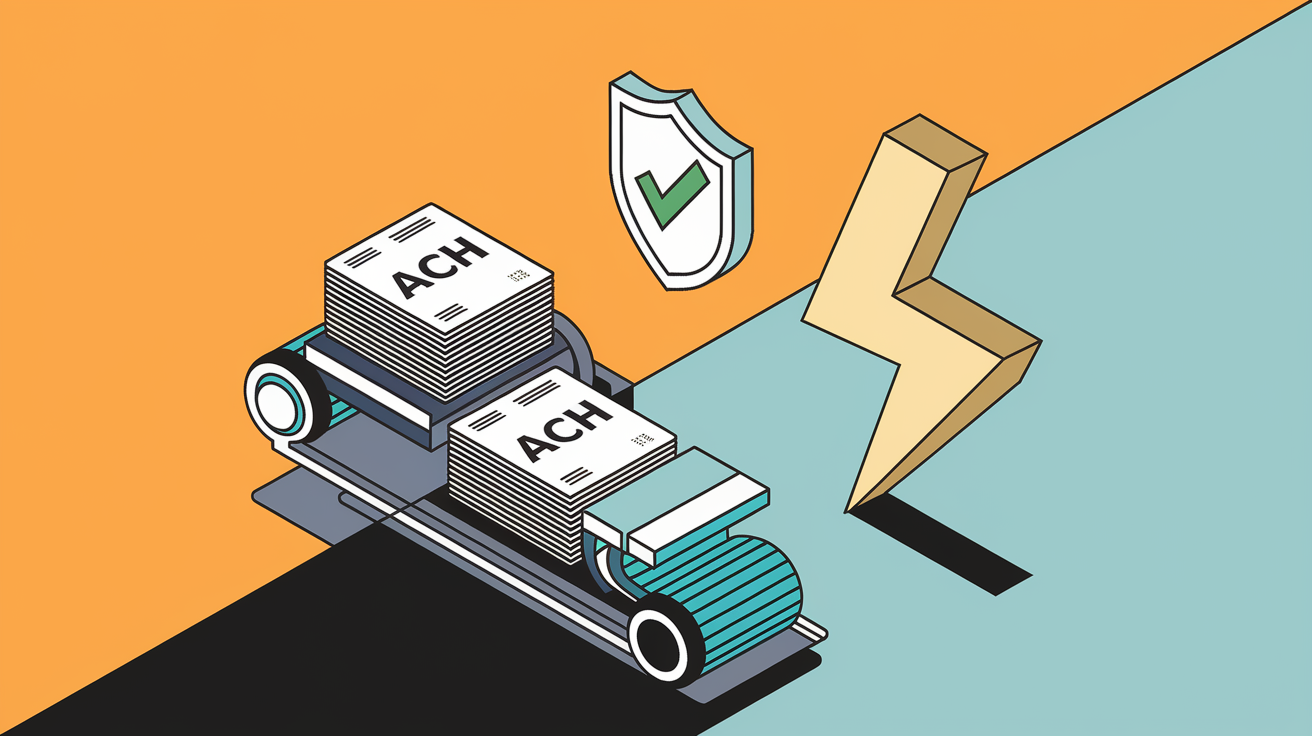
ACH (Automated Clearing House) processes payments in batches at set intervals throughout the day, so your transfer waits in a queue until the next processing window. That queue time is why ACH typically takes one to three business days to settle. Even “same-day ACH” isn’t truly instant. It still follows batch cycles and cutoff times, and funds clear later the same day rather than in seconds.
Because ACH isn’t final immediately, it allows for reversals and corrections. If you send money via ACH and the recipient’s account is closed or flagged, the transaction can bounce back days later. Instant-payment rails settle irrevocably in real time, which means no waiting and no reversals. But also no take-backs if you send to the wrong person.
Key differences:
- Processing method – ACH batches transactions at scheduled intervals. Instant rails handle each transfer individually the moment it’s requested.
- Settlement finality – ACH can be reversed or corrected for days after initiation. Instant transfers are final within seconds.
- Operating hours – ACH runs on business days with cutoff times. Instant rails operate 24/7/365 with no downtime.
Role of P2P Apps: Zelle, Venmo, and Cash App
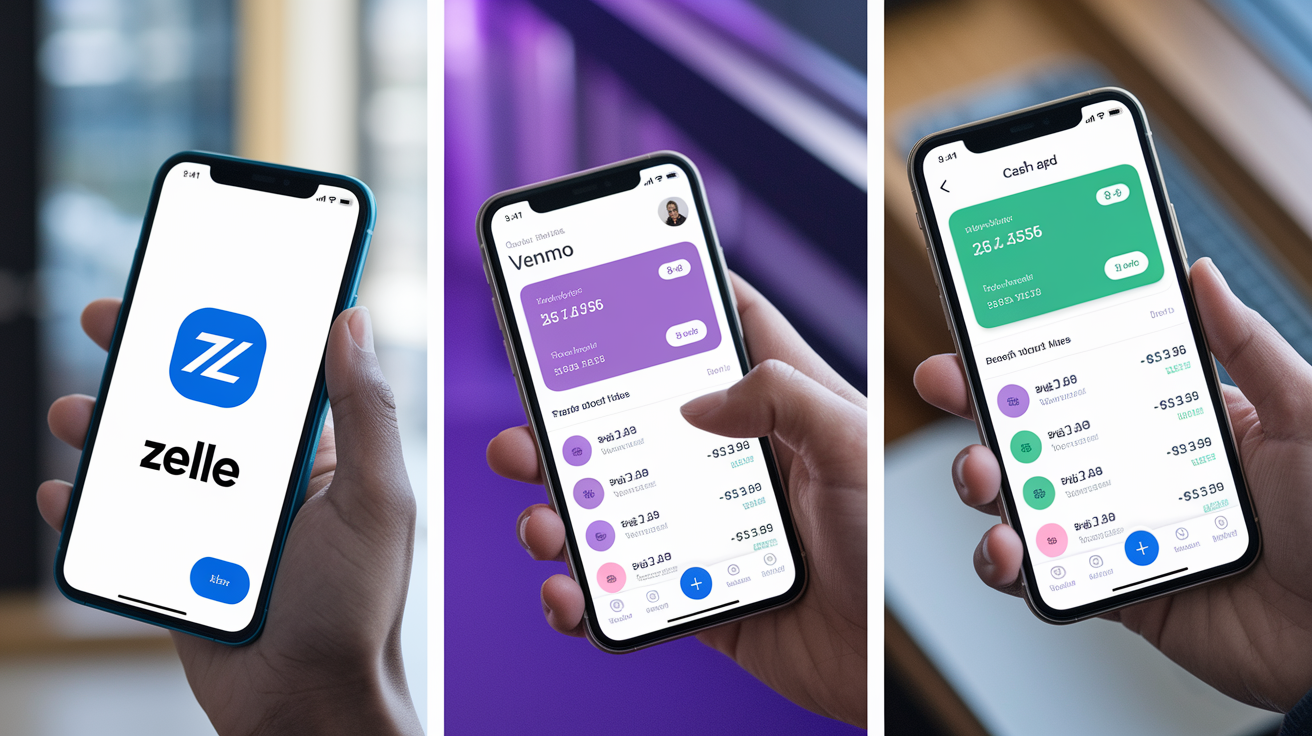
Zelle
Zelle’s built into many bank apps and uses a bank-to-bank messaging network to move funds directly from your checking account to the recipient’s account. When both banks support Zelle, the transfer runs on a real-time rail and completes in minutes. Zelle doesn’t hold your money in a separate app balance. It moves funds from one bank account to another, so you see the debit in your checking register right away and the recipient sees the credit in theirs. Because Zelle operates inside the banking system, there’s usually no fee for standard transfers.
Venmo
Venmo (owned by PayPal) maintains an internal ledger for user balances. When you send money to another Venmo user, the app instantly updates both ledgers, so the recipient sees the funds in their Venmo account within seconds. Moving that balance out to an external bank account triggers a separate settlement step, which can use ACH (free, 1–3 business days) or an instant-transfer service that pushes funds via a debit-card network for a fee (commonly 1.75 percent). Venmo also offers a business profile option that charges sellers 1.9 percent plus 10 cents per transaction.
Cash App
Cash App (owned by Block) works similarly to Venmo: it maintains in-app balances and instant peer-to-peer ledger transfers. To move money from your Cash App balance to your bank, you can choose the free standard deposit (1–3 business days via ACH) or pay for an instant deposit, which routes the transfer through debit-card rails and typically costs around 1.5 percent of the amount. Cash App also offers a linked debit card (Cash Card) that lets you spend your balance directly without waiting for a bank transfer.
Authentication and Security Layers

Before any instant transfer executes, the app or bank verifies your identity using multi-factor authentication. That might be a fingerprint scan, face ID, or a one-time code sent to your phone. The app also checks that the device matches the one you registered and that no unusual login behavior is detected. Many systems use device binding, meaning the app recognizes your phone’s unique hardware ID and flags any attempt to log in from an unknown device.
Once you confirm the transfer, the payment instruction is tokenized. The app replaces sensitive account numbers with temporary tokens that only the payment network can decode. The instruction travels through encrypted channels, and fraud engines at both the sending and receiving banks scan the transaction in real time for suspicious patterns (unusual amount, new recipient, rapid repeat transfers, geographic mismatches). If anything looks off, the system can pause the transfer and ask you to confirm via a secondary authentication step before releasing the funds.
Key security steps:
- Multi-factor authentication confirms your identity using something you know (password), something you have (phone), or something you are (biometric).
- Device and location checks flag logins or transfers from unrecognized phones or geographies.
- Tokenization and encryption protect account numbers and routing codes during transmission.
- Real-time fraud scoring analyzes the transfer against your typical behavior and known fraud patterns before allowing settlement.
Timing, Fees, and Transfer Limits
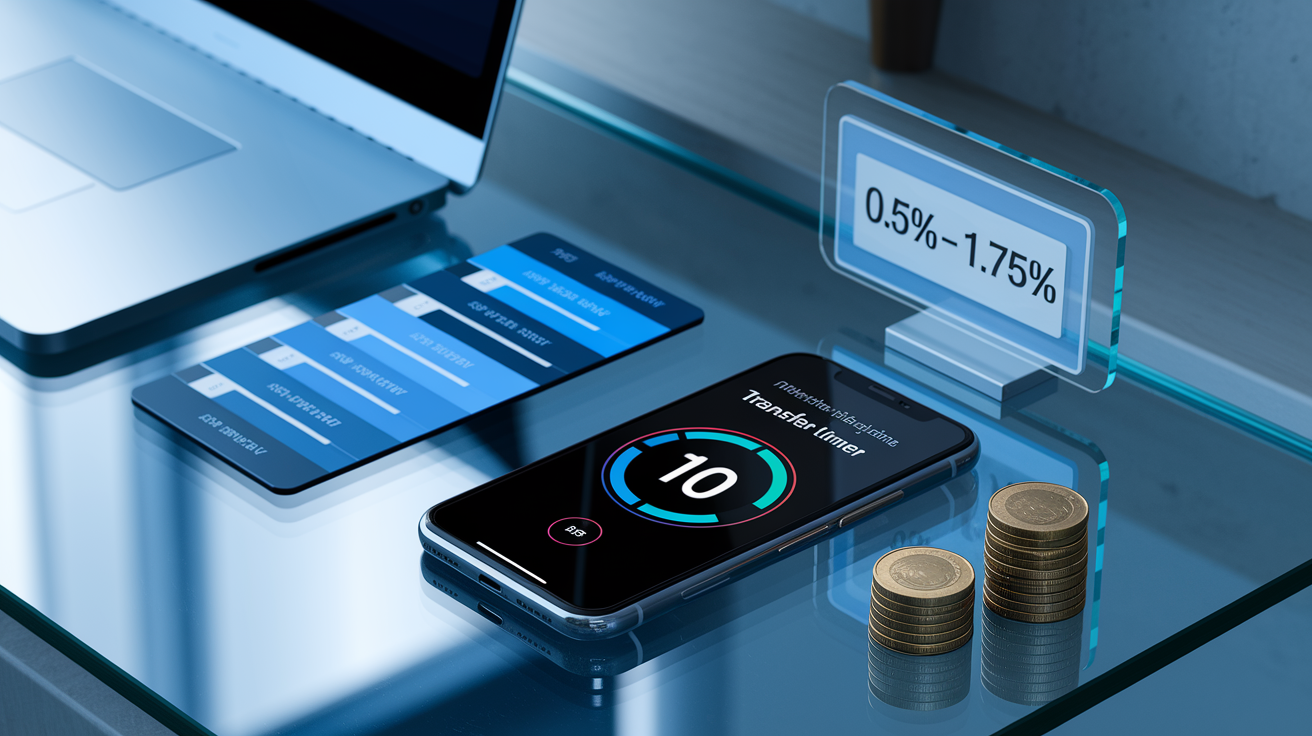
Instant transfers using RTP or FedNow typically settle in under 10 seconds from the moment you hit send to the moment the recipient sees the funds in their account. Transfers that stay inside a single app’s ledger (Venmo user to Venmo user, for example) appear instant because the app updates both balances immediately, even though the underlying bank settlement may happen later in the background.
Fees depend on how you fund the transfer and how fast you want the money to move. Standard bank-to-bank P2P transfers funded from a checking account are usually free. If you use a credit card to fund a transfer, many apps charge around 3 percent. Requesting an instant withdrawal from your app balance to your bank account often costs 0.5 percent to 1.75 percent, while the free standard option uses ACH and takes one to three business days. Some apps also charge business-profile sellers per transaction. Venmo’s business fee is 1.9 percent plus 10 cents.
Transfer limits vary by provider, account age, and verification level. Most apps start new users with lower daily or weekly caps (often 500 to 1,000 dollars per week) and increase limits once you verify your identity with a Social Security number and link a bank account. Banks offering instant transfers may impose separate daily or per-transaction maximums, commonly ranging from 500 to 2,500 dollars for retail customers, though verified business accounts can have higher caps.
Common limit categories:
- Daily send limits – the maximum dollar amount you can transfer out in a 24-hour period.
- Weekly or monthly caps – cumulative limits over longer periods, especially for new or unverified accounts.
- Per-transaction maximums – the largest single payment allowed, which may be lower than your daily limit (for example, 1,000 dollars per send, 2,500 dollars per day).
Common Failures, Delays, and Restrictions

Even instant-payment rails can fail if the recipient’s account is closed, frozen, or flagged for suspicious activity. When that happens, the receiving bank rejects the transfer instruction, and your bank reverses the debit within seconds or minutes. You’ll see an error message in the app, and the funds return to your account. If the recipient entered the wrong account number or email, the transfer may route to an unintended person. And because instant settlements are irrevocable, getting that money back requires the recipient’s cooperation or a legal process.
Insufficient funds in your linked account will stop the transfer before it starts. Most apps check your balance in real time and decline the request if the money isn’t there. Some banks impose velocity controls, which limit how many transfers you can make in a short window, even if each one’s below your daily cap. Risk algorithms may also pause a transfer if it looks unusual. Sending a large amount to a new recipient, making several rapid transfers, or logging in from a new location can all trigger a hold while the system asks you to confirm the activity.
Bank downtime, app outages, or network maintenance can delay or block instant transfers. If the receiving bank’s systems are offline or the instant-payment network is undergoing scheduled maintenance, the transfer will either queue until service resumes or fail outright. Some smaller banks and credit unions haven’t yet connected to RTP or FedNow, so an “instant” transfer request may fall back to standard ACH, turning your expected 10-second settlement into a one to three day wait.
Typical causes of failure or delay:
- Recipient account issues – closed, frozen, or incorrectly entered account details.
- Fraud or risk flags – unusual transfer patterns, new recipient, or login from an unrecognized device.
- System downtime – scheduled maintenance, outages, or the recipient’s bank not supporting instant rails.
Final Words
We walked through the action: you authenticate, send payment instructions, banks exchange messages, instant-payment rails settle in seconds, and both sender and receiver get confirmations.
We compared RTP and FedNow to ACH, explained how Zelle, Venmo, and Cash App interface, and covered security checks, fees, limits, and common causes of delays.
If you still wonder how do instant bank transfers p2p work, the short answer is they move money fast — but only when authentication, rails, and app rules align. Used right, they’re reliable and handy.
FAQ
Q: What is instant P2P bank transfer?
A: The instant P2P bank transfer is a near‑real‑time move of money between two people’s bank accounts using instant-payment rails (like RTP or FedNow), usually completing in seconds and authenticated by the sender’s bank.
Q: How long does a P2P transfer take to a bank account?
A: A P2P transfer to a bank account typically takes seconds on instant rails (under 10 seconds). ACH transfers take 1–3 business days; app processing, fees, or risk checks can add delays.
Q: Is Zelle considered a P2P?
A: Zelle is considered a P2P service that moves money directly between participating banks’ accounts, usually completing near‑instant transfers and relying on bank-to-bank messaging rather than app-held balances.
Q: Is P2P illegal?
A: P2P transfers are not illegal; they’re lawful payment methods. Illegal uses—fraud, money laundering, or unlicensed money services—are unlawful, and banks or apps will block or report suspicious transactions.
