
Want to earn the most travel points without paying for perks you’ll never use?
This guide cuts through the hype and ranks the best travel reward credit cards by real value: how fast they earn, how big the sign-up bonus is, what the annual fee costs, and how easy the points are to spend.
If you want maximum points for dining, everyday spending, or even rent, you’ll find the right pick here, and a clear reason to skip the rest.
Ranked List of Top Travel Rewards Credit Cards

The seven cards below were picked using a scoring system that looks at how fast you earn rewards, sign-up bonuses, annual fees, how easily you can use your points, travel perks, and cardholder protections. Each one got stacked up against hundreds of others and ranked by overall value for travelers who want to rack up points and miles without paying for stuff they won’t actually use.
- Chase Sapphire Preferred – Transfers to a dozen airline and hotel partners, $95 annual fee, strong rewards on dining and streaming.
- Capital One Venture Rewards – Flat 2 miles per dollar on everything you buy, 5X on hotels and rental cars through the issuer portal, simple 1 cent redemptions.
- American Express Gold Card – High earning on dining (4X) and U.S. supermarkets (4X), $325 annual fee, transfers to 21 loyalty programs.
- Capital One Venture X – Premium lounge access, $300 annual travel credit, 10X on hotels and cars booked through Capital One Travel, $395 annual fee.
- Chase Sapphire Reserve – $300 travel credit, $300 dining credit, access to Chase Sapphire Lounges and 1,300+ Priority Pass locations, $795 annual fee.
- Bilt Mastercard – No annual fee, earn points on rent payments up to 100,000 points per year, doubles rewards on Rent Day (1st of the month).
- Wells Fargo Autograph Journey – Best for travelers who book directly with airlines and hotels, strong category bonuses, no foreign transaction fees.
Use this as a starting point to figure out which card matches how you spend and how often you travel. The best card for someone who takes one vacation a year is rarely the best card for someone flying internationally every month.
Side‑by‑Side Travel Credit Card Comparison Table

The table below compares annual fees, baseline rewards rates, welcome bonuses, and signature travel perks across the seven ranked cards. Use it to quickly spot differences in cost, earning power, and the perks that matter most to how you travel. If you’re deciding between two cards, this table shows you the tradeoffs in under a minute.
| Card Name | Annual Fee | Rewards Rate | Welcome Bonus | Key Travel Perks |
|---|---|---|---|---|
| Chase Sapphire Preferred | $95 | 3X dining/streaming, 2X travel | 75,000 points | $50 annual hotel credit, transfers to 14 partners |
| Capital One Venture Rewards | $0 (VentureOne) or $95 (Venture) | 5X hotels/rentals via portal, 2X all purchases | 75,000 miles + $250 credit (Venture) | 1¢ redemptions, no foreign transaction fees |
| American Express Gold Card | $325 | 4X dining/U.S. supermarkets, 3X flights | Varies (typically 60,000–90,000 points) | Transfers to 21 programs, dining credits available |
| Capital One Venture X | $395 | 10X hotels/cars via portal, 5X flights, 2X all purchases | 75,000 miles | $300 travel credit, Priority Pass, Capital One lounges |
| Chase Sapphire Reserve | $795 | 8X Chase Travel, 4X direct flight bookings | 125,000 points | $300 travel + $300 dining credits, lounge access, TSA PreCheck/Global Entry |
| Bilt Mastercard | $0 | 3X dining, 2X travel, 1X rent (up to 100,000/year) | Varies | No-fee rent rewards, 1:1 Alaska transfers, Rent Day double points |
| Wells Fargo Autograph Journey | $0 | Bonus categories for direct airline/hotel bookings | Varies | No foreign transaction fees, travel insurance |
Detailed Reviews of the Top Travel Reward Credit Cards

Each of the seven cards offers a different mix of how you earn, what perks you get, and what you pay. The reviews below explain what makes each card worth considering, where it doesn’t measure up, and which kind of traveler gets the most out of it.
Chase Sapphire Preferred earns 3 points per dollar on dining and select streaming services and 2 points per dollar on travel purchases, which includes stuff like subway tickets and parking garages when you pay via Apple Wallet. The $95 annual fee is the lowest you’ll find in the premium travel card space. The 75,000 point welcome bonus is worth around $1,500 when you transfer to partners like Hyatt or United. Chase Ultimate Rewards points are valued at 2.05 cents each as of July 2025. The card also tosses in a $50 annual hotel credit through Chase Travel. It’s best for travelers who eat out a lot, want flexible transfer options to 14 loyalty programs, and don’t need lounge access or big travel credits. The main catch? You’ve got to transfer points to partners to get full value. If you redeem through the Chase portal at 1.25 cents per point, you’re leaving money on the table.
Capital One Venture Rewards keeps things simple. You earn 5 miles per dollar on hotels, vacation rentals, and rental cars booked through Capital One Travel, and 2 miles per dollar on everything else. Miles redeem at exactly 1 cent each, so the math is easy and there’s no guesswork. The card comes in two versions: VentureOne (no annual fee) and Venture ($95 annual fee with higher bonuses). The Venture card currently offers 75,000 bonus miles after you spend $4,000 in the first three months, plus a $250 first year travel credit. Capital One miles are valued at 1.85 cents each as of July 2025, and they transfer 1:1 to Air France KLM Flying Blue and other partners. This card works well if you want a single card for all your spending without tracking rotating categories or portal requirements. The catch is that some of the highest earning rates require booking through Capital One’s travel portal, which can sometimes have higher base prices than booking directly.
American Express Gold Card is built for people who spend heavily on dining and groceries. It earns 4 points per dollar on dining worldwide (up to $50,000 per year) and 4 points per dollar at U.S. supermarkets (up to $25,000 per year), plus 3 points per dollar on flights booked directly with airlines. Membership Rewards points are valued at 2.0 cents each as of July 2025 and transfer to 21 loyalty programs including Virgin Atlantic, ITA Airways, and Delta. The $325 annual fee is steep, but high spenders can offset it quickly. Earning 4X on $500 monthly grocery spend generates 24,000 points per year, worth around $480 at 2 cents per point. This card is perfect for travelers who rarely fly but eat out often and want access to valuable transfer partners like Virgin Atlantic for transatlantic awards. The downside? The fee stings if you don’t use the dining and supermarket categories heavily, and the card offers minimal travel perks beyond point transfers.
Capital One Venture X sits in the middle of the premium travel card tier with a $395 annual fee. It earns 10 miles per dollar on hotels and rental cars booked through Capital One Travel, 5 miles per dollar on flights booked through the portal, and 2 miles per dollar on all other purchases. The card includes a $300 annual travel credit you can use on Capital One Travel bookings, which drops the effective fee to $95. You also get 10,000 anniversary bonus miles each year, unlimited access to Capital One lounges, complimentary Priority Pass membership for 1,300+ airport lounges worldwide, and a $100 credit for Global Entry or TSA PreCheck every four years. This card makes sense for travelers who value lounge access and want a flat 2X earning rate on all spending. The travel credit is easy to use but locks you into booking through Capital One’s portal. If you’d rather book directly with hotels or airlines, the credit becomes less useful.
Chase Sapphire Reserve is the priciest card in this ranking at $795 annually, but it delivers $300 in annual travel credits, $300 in annual dining credits, $500 in credits for The Edit stays, $300 in DoorDash promos, $300 in StubHub credits, $250 for Apple TV+ annually, and multiple $120 credits for DashPass, Lyft, and Peloton. Total annual credits exceed $2,200 before you count lounge access or insurance benefits. The card earns 8 points per dollar on Chase Ultimate Rewards travel purchases and 4 points per dollar on direct flight bookings. You get access to Chase Sapphire Lounges by The Club, complimentary Priority Pass membership, and a $100 Global Entry or TSA PreCheck credit every four years. Chase only lets you hold one Sapphire card at a time, so having this card means you can’t also hold the Sapphire Preferred. This card works for high spenders who will activate and use all the credits and who travel frequently enough to benefit from lounge access and trip protections. If you won’t use the dining, entertainment, and shopping credits, the $795 fee becomes really hard to justify.
Bilt Mastercard is the only no fee card in this ranking and the only card designed to reward rent payments. It earns points on rent up to 100,000 Bilt Points per calendar year with no transaction fee, but you’ve got to make at least five transactions per statement period to earn points that month. On Rent Day (the 1st of each month), Bilt doubles points on certain categories. So 3X dining becomes 6X, up to 1,000 bonus points per Rent Day. Bilt points are valued at 2.2 cents each as of July 2025 and transfer 1:1 to Alaska Airlines Mileage Plan. A round trip domestic award on American Airlines via Alaska can cost as little as 9,000 miles. This card is best for renters who want to turn unavoidable monthly payments into transferable miles and who will remember to make five purchases each month and time big purchases for Rent Day. The main drawback is the behavioral requirement. Miss the five transaction threshold or forget Rent Day, and the earning power drops sharply.
Wells Fargo Autograph Journey charges no annual fee and focuses on travelers who book directly with airlines and hotels rather than through third party portals. It offers bonus earning in categories that include direct airline and hotel bookings, with no foreign transaction fees and standard travel insurance protections. This card is a solid pick for budget conscious travelers who want rewards without paying an annual fee and who prefer the flexibility and loyalty program benefits of booking direct. The tradeoff is that earning rates and welcome bonuses are typically lower than fee based cards, and you won’t get lounge access or premium credits.
Guide to Maximizing Travel Reward Redemptions
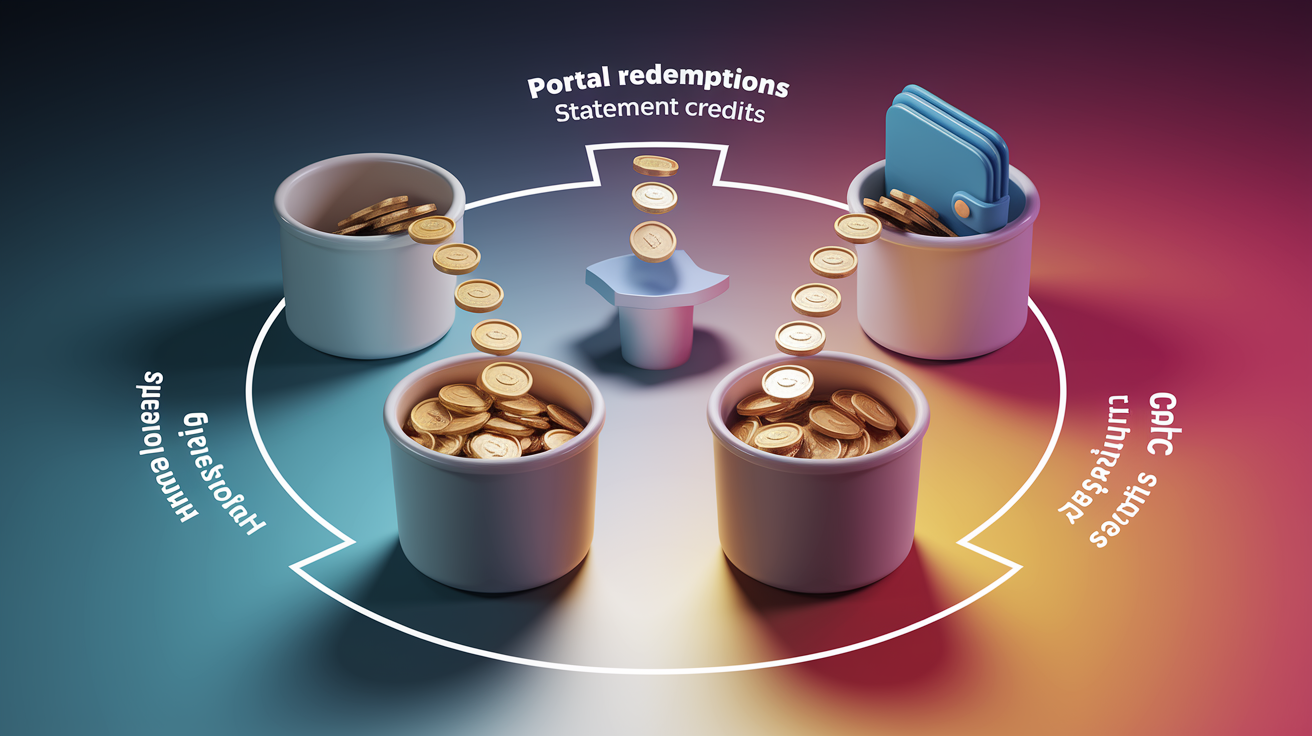
Travel rewards are worth different amounts depending on how you redeem them. Points and miles typically fall into one of four redemption buckets: booking travel via the issuer’s portal (points used like cash), applying statement credits to erase travel charges after purchase, transferring to airline or hotel loyalty programs, or cashing out for gift cards, merchandise, or direct deposits. The industry baseline is around 1 cent per point for portal and statement credit redemptions. Transfer redemptions can swing from under 1 cent to over 2 cents per point depending on the partner program, award availability, and route.
Earning rate is only half the equation. A card that earns 5 points per dollar sounds great, but if those points are worth 0.5 cents each at redemption, you’re earning 2.5 percent back. A card that earns 2 points per dollar but redeems at 2 cents per point delivers 4 percent back. Always multiply the earning rate by the redemption value to calculate real return. For example, 34,000 American Express Membership Rewards points transferred to Virgin Atlantic for two one way economy tickets from New York to London delivers around 2 cents per point in value, turning a $680 cash ticket into a 34,000 point redemption.
- Transfer points to airline and hotel partners for the highest value. Transferring Chase Ultimate Rewards to Hyatt, American Express Membership Rewards to Virgin Atlantic, or Capital One miles to Air France KLM Flying Blue often yields 1.5 to 2+ cents per point. Example: 12,000 Virgin Atlantic miles for a JFK to London economy award is worth around $600 in cash ticket price.
- Use issuer travel portals only when credits or bonus multipliers apply. Capital One Venture X cardholders who book hotels through Capital One Travel earn 10X miles and can apply the $300 annual travel credit, making portal pricing competitive even if base rates are slightly higher.
- Don’t redeem for gift cards or merchandise. These options typically value points at 0.5 to 0.8 cents each, far below travel redemptions.
- Time transfers around award availability, not point balances. Search for award seats first, then transfer the exact number of points you need. Most programs transfer instantly or within 24 hours.
- Stack portal cashback sites with credit card points. Shopping portals like Rakuten or airline shopping portals add 1 to 10 percent cashback on top of credit card earning, multiplying total return on the same purchase.
Key Travel Perks and Protections Explained

Beyond earning points and miles, top travel credit cards include perks that reduce trip costs and protect against common travel disruptions. These benefits often justify annual fees even for travelers who redeem points infrequently.
The six perks below show up on most premium travel cards and add real value to each trip.
- Airport lounge access. Priority Pass membership (included on Capital One Venture X, Chase Sapphire Reserve, and American Express Platinum) provides access to over 1,300 lounges in 500+ cities worldwide. Lounge food, drinks, Wi-Fi, and quiet seating can save $30 to $60 per visit and make layovers productive.
- TSA PreCheck or Global Entry application fee reimbursement. Most premium cards credit the $78 (TSA PreCheck) or $120 (Global Entry) application fee every four years. Global Entry includes TSA PreCheck and speeds up U.S. Customs re-entry.
- Annual travel credits. Chase Sapphire Reserve offers $300 in annual travel credits, Capital One Venture X offers $300 for bookings through Capital One Travel. These credits reduce effective annual fees and cover incidental costs like baggage fees, seat upgrades, or hotel charges.
- Trip delay, cancellation, and interruption insurance. If your flight is delayed six hours or more, cards like Sapphire Reserve reimburse meals, lodging, and essentials up to $500 per ticket. Trip cancellation coverage reimburses non refundable costs if you must cancel due to illness, weather, or other covered reasons.
- Primary rental car insurance. Most travel cards offer secondary collision coverage, meaning your personal auto insurance pays first. A few premium cards (Sapphire Reserve, some Amex Platinum versions) provide primary coverage, which means you don’t have to file a claim with your insurer and you avoid potential rate increases.
- Free checked bags and priority boarding on co-branded airline cards. Cards like the United Explorer offer a free checked bag for the cardholder and one companion on every United flight, saving $35 per bag each way. Annual value for a family of two taking four trips: $560.
These perks turn marginal trips into easy decisions. Lounge access makes a six hour layover tolerable. Trip delay insurance covers an unexpected hotel night when weather cancels your connection. A $300 travel credit pays for three nights at a mid tier hotel, and primary rental car insurance eliminates the $15 per day counter upsell. Add them up, and a $395 Venture X annual fee becomes $95 after the travel credit, then pays for itself with two lounge visits and one delayed flight.
Best Travel Reward Credit Cards by Traveler Type

Matching the right card to your travel frequency, spending habits, and preferences makes the difference between getting full value and paying fees for perks you never use. The six traveler profiles below represent the most common decision paths.
- Frequent international travelers who prioritize lounge access and trip protections. Capital One Venture X or Chase Sapphire Reserve. Both offer Priority Pass lounge access, premium travel insurance, and high earning rates. Venture X costs $395 annually with a $300 travel credit, Reserve costs $795 but includes $300 travel credit, $300 dining credit, and access to Chase Sapphire Lounges.
- Budget conscious travelers who want flexibility without annual fees. Bilt Mastercard or Wells Fargo Autograph Journey. Bilt turns rent into transferable points with no fee, Autograph Journey rewards direct bookings and charges no foreign transaction fees.
- Travelers who spend heavily on dining and groceries. American Express Gold Card. Earning 4X on dining and U.S. supermarkets up to category caps generates points faster than most flat rate cards, and Membership Rewards transfer to 21 programs. The $325 fee pays off if you spend at least $500 per month across dining and groceries.
- Entry level travelers building points for their first big redemption. Chase Sapphire Preferred. The $95 annual fee is low, the 75,000 point welcome bonus is worth around $1,500 when transferred to partners, and the card earns 3X on dining and streaming. It’s the best first premium travel card.
- Business travelers or self employed professionals looking to separate personal and business spending. Capital One Venture X Business. It earns 10X on hotels and rental cars and 5X on flights booked through Capital One Business Travel, with unlimited 2X on all other purchases. The $395 annual fee is a business expense, and the card operates as a charge card requiring full monthly payment.
- Loyalty focused travelers who fly one airline or stay with one hotel chain frequently. Co-branded cards like United Explorer (free checked bag, priority boarding, lounge passes) or Marriott Bonvoy Boundless (annual free night, elite status path). These cards make sense only if you’re already committed to the brand and will use the perks on every trip.
Requirements and Factors to Consider Before Applying

Most top travel rewards cards require good to excellent credit, typically defined as a FICO score of 700 or higher. Issuers use variations of FICO Score 8 or proprietary scoring models, so approval thresholds vary slightly by bank. If your score is below 700, focus on building credit with a no fee cash back card or secured card before applying for premium travel cards. Hard inquiries from applications can temporarily lower your score by a few points, and multiple applications within a short window can signal risk to issuers.
Chase enforces a “5/24 rule” that automatically denies applicants who’ve opened five or more personal credit cards from any issuer in the past 24 months. Business cards from most issuers don’t count toward 5/24, so applicants near the limit should apply for Chase personal cards first, then move to business cards or cards from other issuers. American Express and Capital One don’t have published hard limits like 5/24, but they review recent account openings and may deny applications if you’ve opened several cards recently.
Before applying, look at your monthly spending by category (dining, groceries, travel, gas, general purchases) and match it to each card’s earning structure. If you spend $800 per month on dining, a 4X dining card earns 38,400 points per year on that category alone. If you rarely eat out but spend $1,200 per month on mixed purchases, a flat 2X card earns 28,800 points per year with no category tracking. Also think about your travel patterns. If you fly internationally twice a year, lounge access and trip insurance justify a $395 fee. If you take one domestic trip annually, a no fee card with transferable points is smarter. And estimate whether you’ll actually use annual credits and perks. A $300 travel credit is only valuable if you book travel that qualifies. A $100 Global Entry credit saves money once every four years but offers no value if you already have it or never leave the country.
Final Words
Ranked, compared, and explained, you’ve got a quick list of the top seven cards, a side‑by‑side table, detailed reviews, tips to maximize redemptions, and which card suits each traveler type.
Use the rankings and comparison table to match fees, perks, and your spending. Check credit score needs and welcome bonus timing before applying.
If you pick carefully, one of the best travel reward credit cards here can cut your trip costs, boost perks, and make travel smoother. Good luck. Enjoy the trip.
FAQ
Q: How were the travel credit cards ranked?
A: The travel credit cards were ranked by rewards rates, welcome bonuses, annual fees, redemption flexibility, travel protections, and overall user value—prioritizing which travelers benefit most from each card.
Q: What are the top travel rewards credit cards?
A: The top travel rewards credit cards are Chase Sapphire Reserve, Chase Sapphire Preferred, American Express Platinum, Capital One Venture X, Capital One Venture, Citi Premier, and American Express Gold, covering premium and no‑fee needs.
Q: How do I compare travel cards quickly?
A: To compare travel cards quickly, check annual fee, category rewards rates, welcome bonus value, transfer partners, key perks, and how easily you can redeem points for your trips.
Q: Which travel card is best for beginners?
A: The best travel card for beginners is a no‑annual‑fee or low‑fee card with flexible points and simple earning—ideal if you want easy redemptions without high upfront costs.
Q: Which travel card is best for frequent flyers?
A: The best travel card for frequent flyers is a premium card with transferable points, strong airline partners, lounge access, and elite‑style perks if you travel several times a year.
Q: Is a high annual fee worth it?
A: A high annual fee is worth it if the card’s credits, lounge access, travel protections, and perks deliver more value than the fee; otherwise choose a lower‑fee card.
Q: How can I maximize travel reward redemptions?
A: You can maximize travel reward redemptions by transferring points to airline/hotel partners, using issuer travel portals strategically, timing bookings, saving for high‑value awards, and watching transfer bonuses.
Q: What travel perks should I look for?
A: The travel perks to look for are lounge access, trip delay/cancellation insurance, annual travel credits, global entry/TSA PreCheck credit, baggage protection, and free checked bags or elite benefits.
Q: What credit score do I need for top travel cards?
A: The credit score needed for top travel cards is usually good to excellent—around 700 or higher—though some mid‑tier travel cards accept lower scores.
Q: What should I consider before applying for a travel credit card?
A: Before applying, consider your credit score, ability to meet the welcome bonus spend, annual fee tolerance, typical travel habits, whether you’ll use the perks, and potential interest costs.
Q: How do welcome bonuses work on travel cards?
A: Welcome bonuses work by awarding points or miles after you meet a specified spending minimum within a set time—plan the spend using regular expenses, not impulse purchases.
Q: Can I share or transfer my travel points?
A: You can often share or transfer travel points by adding authorized users, using household transfer rules, or moving points to airline/hotel partners, but exact rules and fees vary by issuer.
