
Think cash back is smarter than travel points?
For many people, that’s a costly mistake.
Travel cards can turn one sign-up bonus into $500 to $1,000 in flights or hotels, and transfers often raise point value well above 1–2% cash back.
This post compares the best credit cards for reward travel and makes the choice simple.
Who should pick which card, what fees you must watch, and which perks actually pay back the annual fee.
Read on to find the right card fast.
Why Travel Rewards Cards Matter More Than Cash Back

Most people think cash back is the smarter play. It’s not, and that mistake costs them hundreds (sometimes thousands) in travel value every year.
Travel rewards cards give you points or miles worth way more than the 1 to 2 percent you’d get with cash back, assuming you actually know what you’re doing with them. A single sign-up bonus can cover $500 to $1,000 in flights or hotels. If you travel often, ongoing earning gets you free international trips, cabin upgrades, or weeks of hotel stays without paying out of pocket.
The difference is redemption value. Cash back pays a fixed rate, usually 1 to 2 cents per dollar spent. Travel points and miles, when you transfer them to airline or hotel partners or use them through issuer portals, regularly hit 1.5 to 2.5 cents per point. Sometimes more. So $10,000 in annual spending might get you $200 in cash back or $400+ in travel.
Travel cards also come loaded with perks cash back cards don’t touch: airport lounge access, annual travel credits, free checked bags, trip insurance, elite status with hotels or car rental companies. These benefits can offset annual fees and make travel less of a hassle.
The tradeoff? Complexity. Travel cards usually charge annual fees, make you track bonus categories, and force you to learn transfer partners and redemption rules. If you barely travel or just want simplicity, a no-fee cash back card might still make sense. But if you fly or book hotels even a few times a year, a travel card pays off, especially when you factor in sign-up bonuses and the ability to stretch points across multiple programs.
According to a NerdWallet study, 68 percent of American adults now carry a travel rewards credit card. The reason is obvious: the math works, as long as you pay your balance in full and don’t rack up interest.
How We Chose the Best Travel Rewards Cards

We reviewed more than 400 credit cards and scored them across five areas: total cost, rewards earning potential, redemption flexibility, perks and protections, and ease of use.
Total cost includes the annual fee, foreign transaction fees, and hidden costs like restrictive redemption rules that leave value on the table. Cards with high annual fees made the list only when their credits, perks, and earning rates justified the price.
Rewards earning potential measures how many points or miles you earn per dollar, across which categories, with what limits. We gave priority to cards earning at least 2X on a broad base of purchases or offering high multipliers (3X to 10X) in common travel and dining categories. We also weighted sign-up bonuses. The best offers deliver 60,000 to 175,000 points after meeting a minimum spending threshold, usually $3,000 to $5,000 in the first three months.
Redemption flexibility separates strong cards from weak ones. Cards that let you transfer points 1:1 to airline and hotel partners scored highest because transfers unlock the best value. We counted transfer partners and checked whether major programs like Hyatt, United, Air France-KLM, and Marriott were included. Cards locking you into a single portal or offering only statement credits scored lower.
Perks and protections were evaluated for real-world usability. Automatic annual travel credits, airport lounge access (Priority Pass, Capital One Lounges, Centurion), TSA PreCheck or Global Entry fee reimbursement, trip insurance, rental car coverage, and elite status with hotels or airlines all add value, but only if they’re easy to activate and use. We penalized cards with complicated, merchant-specific credits that expire unused.
Ease of use covers application requirements (credit score expectations), acceptance (Visa and Mastercard have broader global reach than American Express), and how simple it is to track and redeem rewards. We also considered issuer-specific rules like Chase’s 5/24 policy, which limits approvals if you’ve opened five or more personal credit cards in the past 24 months.
Every card listed here requires good to excellent credit, generally a score of 700 or higher. Most travel cards also carry higher interest rates than average, so they’re a terrible fit if you carry a balance. Our recommendations assume you pay in full every month.
We didn’t include co-branded airline or hotel cards in the main comparison unless they offered unique value general travel cards can’t match. Co-branded cards lock you into a single loyalty program, which limits flexibility. Exception: cards like the Southwest Rapid Rewards lineup, which unlocks the Companion Pass, or the Hilton Honors Surpass, which delivers automatic Gold status and credits offsetting the annual fee.
Best Overall Travel Rewards Card for Most People

Chase Sapphire Preferred® Card is the best starting point for most travelers who want flexibility, strong earning rates, and a reasonable annual fee.
The annual fee is $95, low for a premium travel card. Current sign-up bonus is 75,000 points after you spend $4,000 in the first three months. Those 75,000 Chase Ultimate Rewards points are worth roughly $750 to $1,000 in travel value when transferred to partners like Hyatt, United, or Air France-KLM, or used through the Chase travel portal.
You earn 5 points per dollar on travel booked through Chase Ultimate Rewards, 3 points per dollar on dining (including takeout and delivery), 3 points per dollar on online grocery purchases (excluding Target, Walmart, and warehouse clubs), 3 points per dollar on select streaming services, and 2 points per dollar on other travel purchases. Everything else earns 1 point per dollar.
Chase Ultimate Rewards points transfer 1:1 to 14 airline and hotel partners, including Hyatt, United, Southwest, Air France-KLM, British Airways, Virgin Atlantic, and Singapore Airlines. This gives you access to award flights and hotel stays that often deliver 1.5 to 2.5 cents per point in value, sometimes more. A 17,500-point transfer to Hyatt can book two nights at a Category 1 to 3 property. 12,000 points transferred to Virgin Atlantic can cover a one-way economy ticket from New York to London.
The card also includes a $50 annual Chase Travel Hotel Credit, primary rental car insurance (rare among mid-tier cards), trip cancellation and interruption insurance, and no foreign transaction fees.
The Sapphire Preferred works best if you dine out regularly, subscribe to streaming services, or book travel a few times a year. The 3X categories are broad enough to capture everyday spending without making you track rotating bonuses or activate offers.
Main limitation: you can hold only one Chase Sapphire card at a time, so choosing the Preferred means you can’t also have the Sapphire Reserve unless you product-change or cancel one of them. The Preferred also lacks airport lounge access and the premium credits that come with higher-fee cards.
If you’re new to travel rewards, the Sapphire Preferred gives you a strong foundation in the Chase ecosystem without the complexity or cost of a premium card. You can always upgrade to the Reserve later if your travel frequency increases.
Pros:
- $95 annual fee with 75,000-point sign-up bonus
- 3X on dining, streaming, and online grocery. 5X through Chase portal
- Transfers to 14 partners including Hyatt and United
- Primary rental car insurance and trip protections
- No foreign transaction fees
Cons:
- No airport lounge access
- Lower earning rates on non-bonus categories
- One Sapphire product limit
- Subject to Chase 5/24 rule
Best Premium Travel Card for Heavy Travelers

Chase Sapphire Reserve® is the right choice if you travel frequently, want airport lounge access, and can take full advantage of the card’s credits and perks to offset the $795 annual fee.
Current sign-up bonus is 125,000 points after $4,000 in spending within the first three months. That’s worth $1,250 to $2,000+ in travel when redeemed strategically.
You earn 8 points per dollar on travel purchased through Chase Ultimate Rewards, 4 points per dollar on flights booked directly with airlines, 3 points per dollar on dining and select streaming services, and 1 point per dollar on everything else.
The card comes with a long list of credits and perks:
- $300 annual travel credit (applies automatically to travel purchases)
- $300 annual dining credit
- $500 credit for stays booked through The Edit
- $120 DashPass credit
- $300 in DoorDash promotional credits
- $300 StubHub credit
- $250 Apple TV+ credit
- $120 Lyft credit
- $120 Peloton credit
- $100 Global Entry or TSA PreCheck credit (every four years)
You also get unlimited access to Chase Sapphire Lounges by The Club and Priority Pass membership, which includes more than 1,300 airport lounges in 500 cities worldwide.
The credits can add up to more than $2,000 per year if you use them all, but most people won’t. Real value comes from the travel credit, the dining credit, and the lounge access if you fly often. If you already pay for DashPass, use DoorDash regularly, or subscribe to Apple TV+, those credits become easy wins.
Like the Sapphire Preferred, the Reserve lets you transfer Chase Ultimate Rewards points 1:1 to the same 14 airline and hotel partners. The higher earning rate on travel and direct flights makes the Reserve a better fit for people booking a lot of airfare or hotels.
The Reserve works best for people who travel at least once a month, eat out frequently, and will actually use the entertainment and streaming credits. If you fly less than once a month or rarely use airport lounges, the $795 fee is hard to justify. Stick with the Preferred instead.
Pros:
- 125,000-point sign-up bonus
- $300 travel credit and $300 dining credit
- 8X on Chase portal travel, 4X on direct flights
- Chase Sapphire Lounges and Priority Pass access
- Trip protections and primary rental car coverage
Cons:
- $795 annual fee
- Many credits require behavioral fit to realize value
- One Sapphire product limit
- Subject to Chase 5/24 rule
Best Premium Card for Entertainment and Dining

American Express® Gold Card delivers the highest earning rates on dining and U.S. supermarkets, making it the best choice for people who spend heavily on food.
The annual fee is $325. The card earns 4 points per dollar on dining worldwide (up to $50,000 per calendar year, then 1X), 4 points per dollar at U.S. supermarkets (up to $25,000 per calendar year, then 1X), and 3 points per dollar on flights booked directly with airlines or through American Express Travel. Everything else earns 1 point per dollar.
American Express Membership Rewards points transfer 1:1 to 21 airline and hotel partners, including Delta, Virgin Atlantic, Air France-KLM, British Airways, Hilton, and Marriott. As of July 2025, Membership Rewards points are valued at 2.00 cents per point, one of the highest valuations among transferable currencies.
Real-world example: 34,000 Membership Rewards points transferred in May covered two one-way economy tickets from JFK to London on Virgin Atlantic (12,000 points) and connecting flights from Milan to Paris on ITA Airways and Paris to Atlanta on Air France (22,000 points).
The $325 annual fee is offset if you spend enough in the 4X categories. Spending $8,000 per year on dining and groceries combined would earn 32,000 points, worth roughly $640 in travel value when transferred to partners. That alone justifies the fee.
The card doesn’t include airport lounge access or travel credits, so it’s best used alongside a premium card like the Platinum or Venture X if you want those perks. The Gold Card is a specialist tool for high earners in food categories, not an all-in-one travel card.
Main limitation is the earning caps: $50,000 in dining and $25,000 in supermarkets per calendar year. Most people won’t hit those limits, but if you run a business or have a large family, the caps could matter.
Pros:
- 4X on dining worldwide and U.S. supermarkets
- 3X on direct flights
- Transfers to 21 partners. Points valued at 2.00¢
- High redemption value for food-focused spenders
Cons:
- $325 annual fee
- Earning caps ($50k dining, $25k supermarkets)
- No lounge access or travel credits
- American Express acceptance lags Visa/Mastercard globally
Best Premium Card for Maximum Credits and Lounge Access

The Platinum Card® from American Express is the best choice if you want the most extensive suite of credits, elite hotel benefits, and access to the best airport lounges in the world, and you’re willing to manage a long list of perks to offset the $895 annual fee.
Current sign-up bonus is up to 175,000 points. You earn 5 points per dollar on flights booked directly with airlines or through American Express Travel, and 1 point per dollar on everything else.
The card comes with more than $2,200 in potential annual credits and perks, though realizing that value requires intentional use:
- $600 Fine Hotels + Resorts credit
- $300 Digital Entertainment Credit (covers eligible streaming services and newspapers)
- $200 airline credit (choose one airline per year)
- $200 Uber Cash
- $155 Walmart+ credit (Walmart+ costs $12.95/month)
- $120 Uber One credit
- $100 Saks credit
- $400 Resy credit
- $300 lululemon credit
- $209 CLEAR Plus credit
- $200 Oura Ring credit
- $100 Global Entry or TSA PreCheck credit (every four years)
You also get automatic enrollment in elite status programs with Marriott, Hilton, and Hertz, plus access to Centurion Lounges, Delta Sky Clubs (when flying Delta), Escape Lounges, and Priority Pass.
The Platinum Card works only if you can use most of the credits without changing your spending behavior. If you already pay for Walmart+, use Uber regularly, shop at Saks, or dine through Resy, the credits become easy value. If you have to force it, the $895 fee will feel like a waste.
The card isn’t a strong everyday earner. 1X on non-flight purchases is low compared to other premium cards. Pair it with the Amex Gold for dining and groceries, or use a 2X flat-rate card like the Capital One Venture X for non-bonus spending.
The Platinum Card is best for people who fly frequently, value airport lounge access, and want elite hotel benefits. If you travel less than once a month or don’t care about lounges, you’re better off with the Sapphire Reserve or Venture X, which deliver similar perks with fewer hoops.
Pros:
- Up to 175,000-point sign-up bonus
- More than $2,200 in potential annual credits
- Centurion Lounges, Delta Sky Clubs, and Priority Pass
- Fine Hotels + Resorts and elite hotel status
- 5X on flights
Cons:
- $895 annual fee
- Credits require enrollment and behavioral fit
- Only 1X on non-flight purchases
- American Express acceptance limited outside the U.S.
Best Flat-Rate Travel Card with Strong Portal Rewards
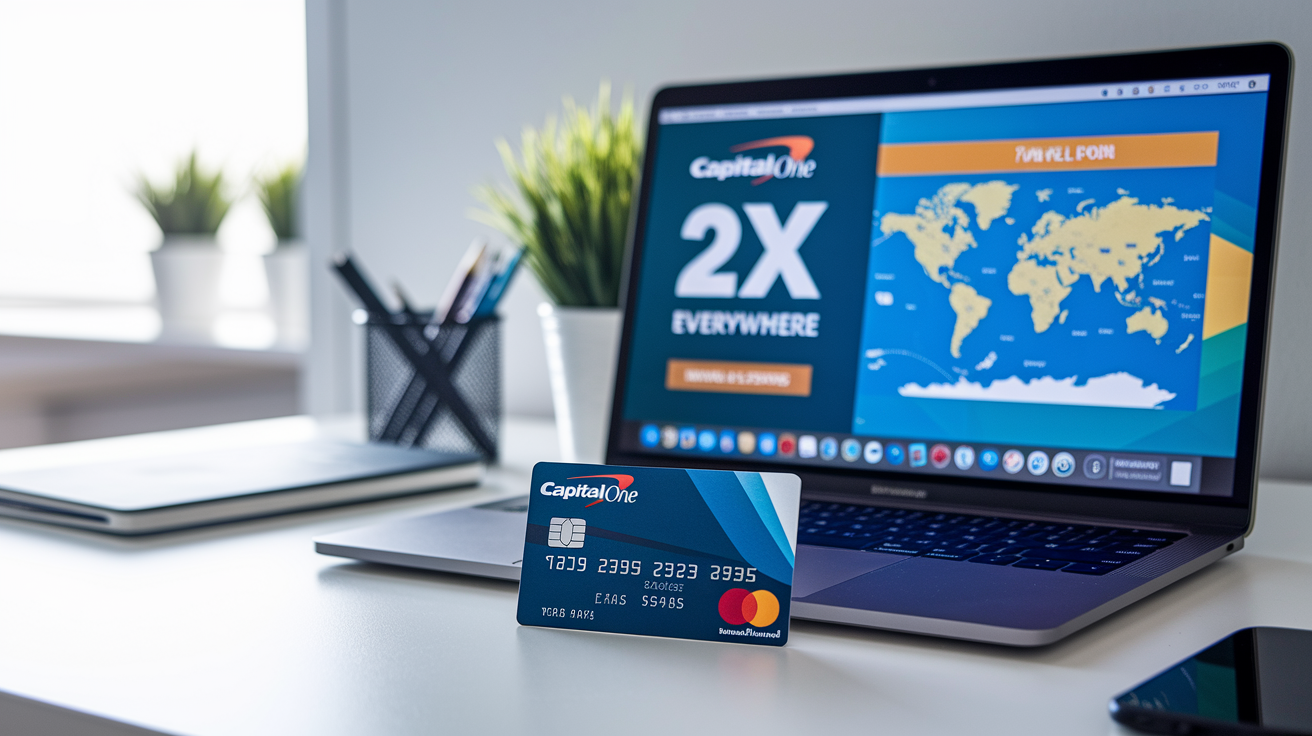
Capital One Venture Rewards Credit Card is the best option if you want a simple, flat earning rate with boosted rewards when booking through the issuer’s travel portal.
The card has no annual fee for the first year, then $95. A limited-time offer includes a $250 Capital One Travel credit in the first year plus 75,000 bonus miles after $4,000 in spending within the first three months. That $250 credit plus the 75,000 miles is marketed as $1,000 in travel value.
You earn unlimited 2 miles per dollar on all purchases and 5 miles per dollar on hotels, vacation rentals, and rental cars booked through Capital One Travel. The flat 2X rate makes this card easy to use. You don’t need to track bonus categories or activate quarterly offers.
Capital One miles transfer 1:1 to more than 15 airline and hotel partners, including Air France-KLM, Avianca, British Airways, Cathay Pacific, Turkish Airlines, and Wyndham. As of July 2025, Capital One miles are valued at 1.85 cents per mile.
You also get up to $120 in Global Entry or TSA PreCheck credit every four years, and Capital One miles never expire as long as your account stays open.
The Venture Rewards card works best if you want simplicity and don’t care about airport lounge access or premium perks. The 2X everywhere rate and 5X portal bonus give you solid earning power without complexity.
Main tradeoff: no lounge access, no travel credits, and fewer perks than the Venture X. If you value those benefits, the Venture X is a better choice despite the higher annual fee.
Pros:
- Unlimited 2X miles on all purchases
- 5X through Capital One Travel portal
- $250 first-year travel credit (limited-time offer)
- 75,000-mile sign-up bonus
- Miles never expire. Transfers to 15+ partners
Cons:
- $95 annual fee after first year
- No lounge access or annual travel credits
- Lower per-mile valuation vs. Chase or Amex
- Fewer premium perks
Best Premium Card with Strong Portal Bonuses and Mid-Tier Fee

Capital One Venture X Rewards Credit Card is the best mid-premium option if you want airport lounge access, a meaningful annual travel credit, and high earning rates on travel booked through the issuer portal, all for less than the Sapphire Reserve or Amex Platinum.
The annual fee is $395. Current sign-up bonus is 75,000 miles after spending $4,000 in the first three months.
You earn at least 2 miles per dollar on all purchases, 5 miles per dollar on hotels, vacation rentals, and rental cars booked through Capital One Travel, and 10 miles per dollar on hotels and rental cars booked through Capital One Travel. That 10X rate is one of the highest portal bonuses available.
The card includes a $300 annual Capital One Travel booking credit, which effectively reduces the annual fee to $95 if you use the full credit. You also get a 10,000-mile anniversary bonus each year (worth roughly $185 at 1.85 cents per mile), up to $120 in Global Entry or TSA PreCheck credit every four years, unlimited access to Capital One Lounges, and Priority Pass membership.
Real-world example: the $300 travel credit was used to offset a three-night stay at the Conrad Las Vegas, reducing the out-of-pocket cost to $314. That same user transferred Capital One miles to Air France-KLM Flying Blue to book two Delta economy tickets for a domestic trip.
The Venture X is a strong middle ground between the no-frills Venture Rewards card and the ultra-premium Sapphire Reserve or Amex Platinum. You get lounge access, a usable annual credit, and strong portal bonuses without the behavioral complexity of the Platinum’s many niche credits.
The card works best if you book hotels and rental cars regularly and don’t mind using the Capital One Travel portal to unlock the 10X earning rate. If you prefer transferring points to airline partners for maximum value, the Chase Sapphire Reserve may be a better fit because Chase has stronger airline transfer options.
Pros:
- $395 fee with $300 annual travel credit
- 10X on hotels and cars via Capital One Travel
- Unlimited 2X on all purchases
- Capital One Lounges and Priority Pass
- 10,000-mile anniversary bonus
Cons:
- Best earning requires portal bookings
- Fewer airline transfer partners vs. Chase or Amex
- No dining or entertainment credits
- Annual fee still $395 before credit
Best Cards for Southwest Loyalists and Companion Pass

Southwest Rapid Rewards Credit Cards (Plus, Premier, Priority, business Premier, and business Performance) are the only cards that let you earn the Southwest Companion Pass through credit card sign-up bonuses and spending.
The Companion Pass is one of the most valuable loyalty perks in travel: once you qualify, a designated companion flies with you for free (except taxes and fees, usually $5.60 per one-way domestic flight) on every Southwest flight for the rest of the calendar year you earned it plus the entire following year.
To earn the Companion Pass, you must either fly 100 qualifying one-way flights or earn 135,000 qualifying points in a single calendar year. Credit card sign-up bonuses and spending count toward the 135,000-point threshold.
Fastest strategy: open a Southwest Performance Business card first, hit the sign-up bonus (typically 80,000+ points), then open a personal Southwest card (Plus, Premier, or Priority) about 30 days later and hit that bonus. Combined, the two bonuses plus minimum spending will put you close to or over the 135,000-point threshold. Timing matters. Apply early in the calendar year (January or February) so you get nearly two full years of Companion Pass benefits.
Annual fees range from $99 (Plus) to $299 (business Performance). Current sign-up bonuses range from 60,000 to 85,000 points depending on the card and current offers.
All Southwest cards earn 3 points per dollar on Southwest purchases and 1 point per dollar on everything else. Some cards also earn 2 points per dollar on internet, cable, phone, and select streaming services. Perks include a free checked bag (saving $35 each way per person), complimentary preferred seat selection at booking, and extra-legroom upgrade eligibility.
Higher-tier cards (Priority and business Performance) include a $75 annual Southwest travel credit and 10,000 Companion Pass qualifying points each anniversary.
Southwest cards make sense only if you fly Southwest regularly and can use the Companion Pass. If you fly other airlines or prefer flexible points that transfer to multiple partners, stick with Chase Sapphire Preferred, Amex Gold, or Venture X.
Pros:
- Only path to Companion Pass via credit cards
- Free checked bag saves $70+ per round trip
- 3X on Southwest purchases
- Sign-up bonuses deliver 60k to 85k points
- Some cards include $75 annual travel credit
Cons:
- Points live only in Rapid Rewards (no transfers)
- Companion Pass threshold is 100 flights or 135k points
- Annual fees $99 to $299
- Limited value if you don’t fly Southwest
Best No-Annual-Fee Travel Cards for Everyday Spending

Wells Fargo Autograph® Card and Capital One VentureOne Rewards – Miles Boost are the two best no-fee options for earning travel rewards without paying an annual fee.
The Wells Fargo Autograph earns 3X points on restaurants, gas stations, transit, travel, and streaming services, and 1X on everything else. No annual fee. No foreign transaction fees. The broad 3X categories make it a strong everyday earner, and the no-fee structure means you can keep it open indefinitely without cost.
The Autograph works best as a long-term keeper card for people who want travel rewards but don’t want to pay an annual fee or manage complex redemption rules. Pair it with a transferable-points card (like Sapphire Preferred or Amex Gold) to maximize value when you redeem.
The Capital One VentureOne Rewards – Miles Boost also has no annual fee. It earns unlimited 1.25 miles per dollar on all purchases and 5 miles per dollar on hotels and rental cars booked through Capital One Travel. The flat 1.25X rate is lower than the 2X you’d get with the Venture Rewards card, but avoiding the $95 annual fee makes sense if your spending is modest.
VentureOne miles transfer 1:1 to Capital One’s 15+ airline and hotel partners, so you still get access to high-value redemptions without an annual fee.
Both cards work best for people who travel occasionally, want to earn points without paying a fee, and don’t need airport lounge access or premium perks. If you travel more than a few times a year, upgrading to a card with an annual fee (like Sapphire Preferred or Venture Rewards) will usually deliver better long-term value.
Pros (Autograph):
- No annual fee
- 3X on restaurants, gas, transit, travel, streaming
- No foreign transaction fees
- Good long-term keeper card
Cons (Autograph):
- No sign-up bonus on most offers
- Points less flexible than Chase/Amex/Capital One transferable currencies
- Lower earning on non-bonus categories
Pros (VentureOne):
- No annual fee
- 1.25X on all purchases. 5X via Capital One Travel
- Transfers to 15+ partners
- Miles never expire
Cons (VentureOne):
- Lower earning rate vs. Venture Rewards
- No lounge access or credits
- Smaller sign-up bonus vs. paid cards
Best Card for Earning Points on Rent
Bilt Mastercard® is the only card that lets you earn points on rent with no transaction fee, making it uniquely valuable for renters who pay at least $1,000 per month.
The card has no annual fee. You earn points on rent up to 100,000 Bilt Points per calendar year. To qualify, you must make at least five transactions on the card each statement period. If you don’t hit five transactions, you won’t earn points on that month’s rent payment.
Bilt also offers a “Rent Day” bonus on the first of every month: you earn double points on all non-rent purchases, up to 1,000 bonus points per month. For example, the card normally earns 3X on dining. On Rent Day, dining earns 6X (up to the 1,000-point cap).
Bilt Rewards points transfer 1:1 to Alaska Airlines Mileage Plan, which gives you unique access to Alaska’s partner network including American Airlines, Cathay Pacific, and Japan Airlines. As of July 2025, Bilt points are valued at 2.2 cents per point, the highest valuation among transferable currencies.
Real-world example: 9,000 Alaska miles (transferred from Bilt) booked a round-trip domestic flight between Charlotte and Louisville on American Airlines.
If you pay $2,000 per month in rent, you’d earn 24,000 Bilt points per year just from rent, worth roughly $528 in travel value. Add in the Rent Day bonuses and regular spending, and the card can deliver serious value even with no annual fee.
The card works only if you can consistently make five transactions per statement period and your landlord accepts Bilt payments. Not all landlords or property managers participate, so check eligibility before applying.
Bilt is a specialist card for renters, not an all-purpose travel card. Pair it with a transferable-points card like Sapphire Preferred or Amex Gold for broader earning and redemption options.
Pros:
- No annual fee
- Earn on rent up to 100k points/year, no transaction fee
- Rent Day: double points (up to 1k bonus/month)
- Transfers 1:1 to Alaska. Points valued at 2.2¢
- Unique access to Alaska Mileage Plan
Cons:
- Must make 5 transactions per statement to earn rent points
- Limited to participating landlords/properties
- Lower earning on non-rent, non-Rent-Day purchases
- Fewer transfer partners than Chase/Amex/Capital One
Best Co-Branded Hotel Card for Automatic Status
Hilton Honors American Express Surpass® Card is the best hotel co-branded card if you stay at Hilton properties regularly and want automatic Gold status without earning it through stays.
The annual fee is $150. You get automatic Hilton Honors Gold status, which includes a daily food-and-beverage credit at U.S. properties (or complimentary continental or hot breakfast), complimentary room upgrades when available, and late checkout.
You also earn an 80 percent bonus on points earned from paid Hilton stays, and you get complimentary National Car Rental Emerald Club Executive status after enrollment. National Executive status lets you skip the counter, choose any car from the Emerald Aisle, and add a second driver for free.
Real-world example: the breakfast credits and room upgrades were used across multiple Hilton stays, and the National status saved time at Minneapolis-St. Paul during a busy summer travel week.
The $150 annual fee is easy to justify if you stay at Hilton a few times a year. A single breakfast credit can be worth $15 to $25 per day, and room upgrades to suites or better views add tangible comfort.
The card works best for people who already stay at Hilton and want to maximize the value of those stays. If you prefer flexibility across hotel brands, stick with a transferable-points card that lets you move points to Hilton, Marriott, Hyatt, and others.
Pros:
- $150 annual fee with automatic Hilton Gold status
- Daily breakfast/food credit at U.S. properties
- Complimentary upgrades and late checkout
- 80% bonus on paid Hilton stays
- Free National Executive status
Cons:
- Locked into Hilton portfolio
- Points less flexible than Chase/Amex/Capital One
- Limited value if you don’t stay at Hilton
- Gold status available free via Amex Platinum
How to Maximize Sign-Up Bonuses Without Overspending
Sign-up bonuses are the fastest way to accumulate travel points, but only if you hit the spending threshold without creating debt or making unnecessary purchases.
Most travel cards require $3,000 to $5,000 in spending within the first three months to earn the bonus. The bonus itself is usually worth $500 to $1,000+ in travel value, 60,000 to 175,000 points depending on the card.
The key is timing your application around legitimate large purchases you were already planning to make: annual insurance premiums, property taxes, tuition payments, business expenses, or holiday shopping. If you don’t have a natural big expense coming up, shift your recurring bills to the new card temporarily.
Move your phone bill, internet, subscriptions (streaming, gym, software), and any other autopay charges to the new card for the first three months. If your rent or mortgage can be paid by credit card through a service like Bilt or Plastiq (check fees first), that’s another option.
Don’t manufacture spending by buying gift cards, prepaying bills you don’t need to prepay, or making purchases you wouldn’t otherwise make. The interest you’d pay if you carry a balance will erase the bonus value, and buying things you don’t need defeats the purpose of earning rewards.
If you’re $500 short of the spending threshold with a week left, look for legitimate expenses you can prepay without penalty: groceries, gas, dining out with friends (offer to put the bill on your card and collect cash), or stocking up on household items you’ll use anyway.
Never carry a balance to meet a sign-up bonus. If you can’t pay the full statement balance, you shouldn’t be opening a new rewards card. The interest will cost more than the bonus is worth.
Most issuers track spending from the approval date, not the day you receive the card in the mail, so start using the card as soon as it arrives. Set a calendar reminder for 30 days before the deadline to check your progress.
Some issuers offer additional bonuses for adding an authorized user or making a purchase in a specific category within the first few months. Read the terms carefully and activate any extra offers.
Once you’ve earned the bonus, decide whether to keep the card or product-change it to a no-fee version. If the annual fee is coming up and you’re not using the card’s perks, downgrading preserves your credit history without the cost.
Understanding Point Valuations and Transfer Partners
Not all points are worth the same. The value you get depends on how you redeem them.
Cash back pays a fixed value: 1 cent per point or mile. Travel points fluctuate based on redemption method. The same 50,000 points could be worth $500 in cash back, $750 when used to book travel through an issuer portal, or $1,000+ when transferred to an airline or hotel partner for a high-value award.
The three main redemption methods are:
1. Statement credit or cash back
You erase travel purchases from your statement or redeem for cash, gift cards, or merchandise. This usually delivers the lowest value, around 1 cent per point. Use this only when you need cash or can’t find a good transfer option.
2. Booking through the issuer’s travel portal
You use points to book flights, hotels, or rental cars through the card issuer’s portal (Chase Travel, Capital One Travel, Amex Travel). Points are worth a fixed amount, usually 1 to 1.5 cents each. Some premium cards offer a bonus: the Sapphire Reserve gives 1.5 cents per point through Chase Travel. The Venture X gives boosted earning (10X) but still values miles at roughly 1 cent each when redeemed.
Portal bookings are simple and work well for domestic flights or hotels where award availability is limited. The downside: you’re often paying retail prices, and you miss out on elite benefits or airline miles you’d earn from a direct booking.
3. Transferring to airline or hotel loyalty programs
You move points 1:1 from your credit card to a partner airline or hotel program, then book award flights or hotel stays using those miles or points. This usually delivers the highest value, 1.5 to 2.5 cents per point or more.
Examples:
- Chase Ultimate Rewards to Hyatt: 17,500 points books two nights at a Category 1 to 3 Hyatt (value: roughly $300 to $400, or 1.7 to 2.3¢ per point).
- Amex Membership Rewards to Virgin Atlantic: 12,000 points books a one-way economy ticket JFK to London (value: roughly $400, or 3.3¢ per point).
- Capital One miles to Air France-KLM: used to book domestic Delta flights or international award tickets with strong value per mile.
Final Words
You walked through the choices that matter: reward rates, annual fees, sign-up bonuses, travel perks, and transfer partners. The article gave real examples and rules of thumb so you can see the tradeoffs.
We compared premium vs no-fee cards, showed when a high annual fee pays off, and flagged the catches like foreign transaction fees and blackout rules.
Use the short checklist to narrow your options and pick one of the best credit cards for reward travel that fits your routes and habits. Travel more, worry less.
FAQ
Q: What should I do if the hyperlink list is missing?
A: If the hyperlink list is missing, choose to either send it now (option 1) or let me proceed without links (option 2); I’ll pause if you plan to provide links.
Q: What does option 1 mean?
A: Option 1 means you intend to provide the hyperlink list now. I’ll pause work until I receive URLs, anchor text, and placement preferences, then finalize the outline with up to two internal and two external links.
Q: What does option 2 mean?
A: Option 2 means there are no hyperlinks available, so I should proceed with [Hyperlinks] = na. I’ll build the outline without link slots; links can be added later if needed.
Q: Which option do you recommend?
A: I recommend option 1 if you have links to improve SEO or context. Choose option 2 only if there truly are no links; we can still add them later but with extra edits.
Q: How should I format the hyperlink list when I send it?
A: When you send the hyperlink list, format each link as: URL, anchor text, and preferred placement (section or paragraph). Use plain text, CSV, or a Word document for clarity.
Q: What happens to the outline if I don’t send links?
A: If you don’t send links, the outline will mark [Hyperlinks] = na and omit link placements. The structure, headings, and content will still be completed on schedule.
Q: Can links be added later if I pick option 2?
A: Links can be added later if you pick option 2. Adding them afterward may require another edit pass and could shift timelines or need extra clarification.
