
Think your crypto is safe on an exchange? Lose the keys and it’s gone, no password reset, no bank to call.
This guide to cryptocurrency custody and security lays out who really owns your coins, the tradeoffs between self-custody and custodial services, and the practical tools that work: hardware wallets, cold storage, multisig, and smart backups.
Read it to learn a simple, tiered plan you can use today to protect your digital assets and reduce the risk of theft, loss, or platform failure.
Core Principles of Secure Cryptocurrency Storage
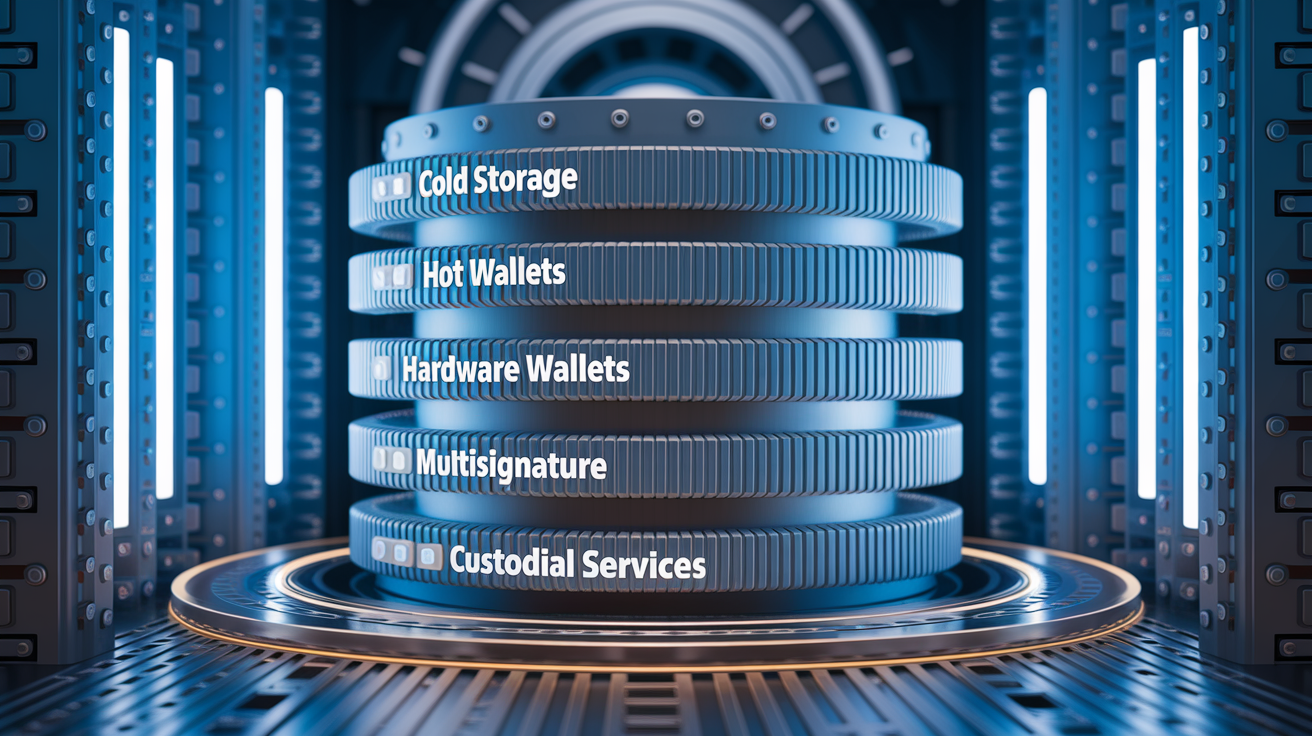
Cryptocurrency custody boils down to one hard truth: whoever holds the private keys owns the money. There’s no password reset, no fraud department to call, and definitely no FDIC safety net if something goes wrong. This reality forces every holder into a choice between two paths: self-custody, where you manage your own keys, or third-party custody, where an exchange or service provider does it for you.
Self-custody gives you complete control. You hold the keys, you approve every transaction, and nobody can freeze or seize your funds. But that control comes with total responsibility. Lose your seed phrase, forget your password, or click the wrong phishing link? Your assets are gone. No appeals. Third-party custody offloads that burden to a company with professional security setups, regulatory oversight, and sometimes insurance. The downside is counterparty risk. Exchange collapses, regulatory seizures, and insider theft have wiped out billions in custodial accounts. If you’re a frequent trader who needs quick access, exchanges make sense. For long-term holders, self-custody with solid backup routines is usually safer.
The most secure approaches layer multiple protections and split assets by how you actually use them. Institutions and experienced holders typically follow a tiered model: most holdings in cold storage, small operational balances in hot wallets. This keeps most funds offline while leaving enough accessible for day-to-day transactions.
Here are the five main custody methods:
- Cold storage keeps private keys completely offline, away from any internet-connected device. Think hardware wallets, air-gapped computers, or paper wallets locked in a safe.
- Hot wallets are software wallets connected to the internet for instant transaction signing. Convenient for daily use but exposed to malware, phishing, and remote attacks.
- Hardware wallets are dedicated physical devices that store keys in secure chips and sign transactions offline, even when plugged into a compromised computer.
- Multisignature (multisig) wallets require multiple independent keys to authorize a transaction (like 2 of 3 or 3 of 5). This spreads control across devices or people and removes single points of failure.
- Custodial services are licensed third parties who manage keys for clients, offering institutional-grade security, insurance, compliance reporting, and recovery support in exchange for custody fees and less direct control.
Hardware Wallets and Their Security Advantages

Hardware wallets keep private keys inside tamper-resistant chips that stay offline even when the device connects to a computer or phone. When you start a transaction, the wallet signs it internally and sends out only the signed result. Your private key never leaves the device and never touches your potentially infected computer. This cuts down the attack surface dramatically. Even if your laptop has keyloggers or clipboard hijackers, attackers can’t pull your seed phrase or signing key from the hardware wallet.
Most reputable hardware wallets include secure elements (specialized chips built to resist physical and software attacks), PIN protection, and optional passphrase layers. Firmware updates are digitally signed by the manufacturer so malicious firmware can’t be installed. Device provenance matters. Counterfeit hardware wallets and supply-chain tampering happen, so buy directly from the manufacturer or an authorized reseller and verify the device’s authenticity when you first turn it on.
When picking a hardware wallet, check these four things:
- Secure element certification. Look for devices using chips certified to standards like Common Criteria EAL5+. These chips resist side-channel attacks and physical probing.
- Open-source firmware and audit history. Transparency lets independent security researchers spot vulnerabilities before attackers exploit them. Check for recent third-party audits and active developer communities.
- Recovery and backup features. Make sure the device generates a standard BIP39 seed phrase, supports passphrase protection, and provides clear instructions for secure offline backup. Avoid proprietary recovery schemes that lock you into one vendor.
- Supported assets and integration. Confirm the wallet natively supports your assets or integrates with trusted software wallets. Compatibility with multisig schemes and staking protocols gives you future flexibility.
Cold Storage Solutions for Long-Term Protection
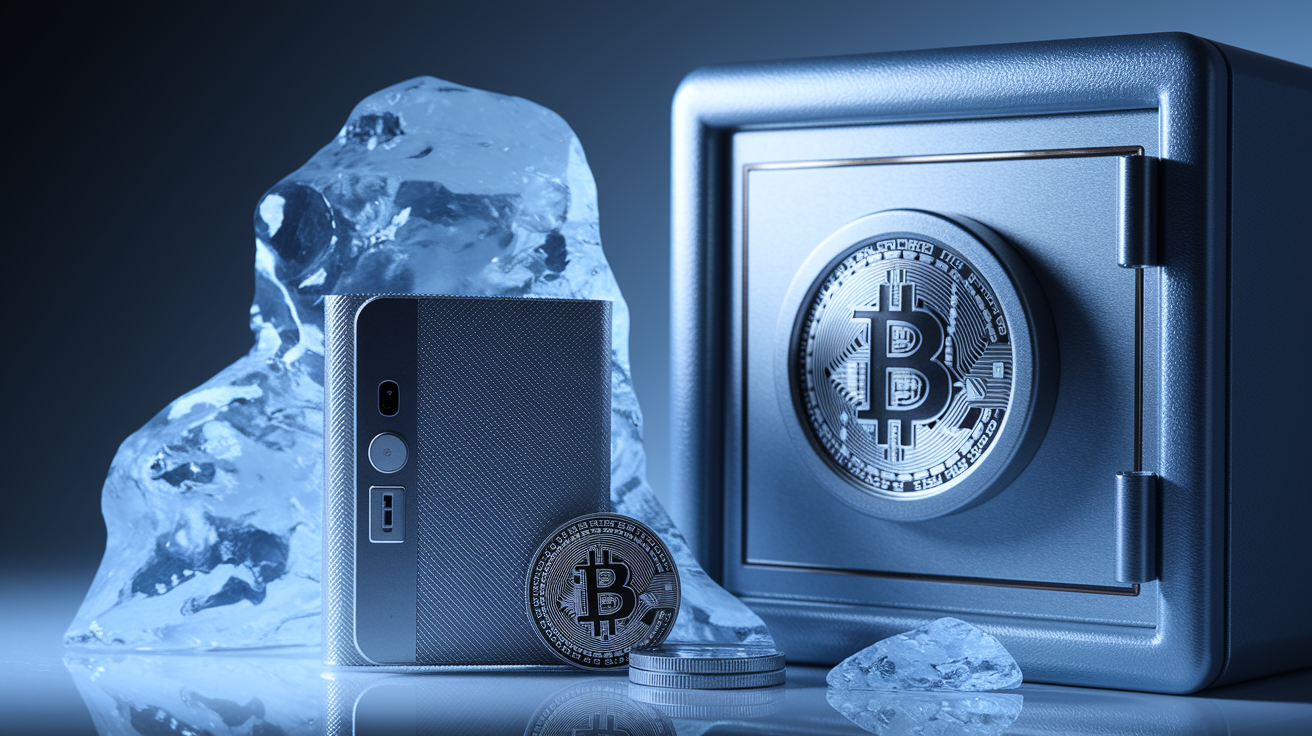
Cold storage means keeping private keys completely disconnected from internet-connected systems. Simple goal: if an attacker can’t reach your keys over a network, they can’t steal them remotely. Cold storage is the default for any crypto you won’t touch for months or years. Long-term savings, inheritance planning, treasury reserves. All of it belongs in cold storage, not on an exchange or in a browser wallet.
Common cold storage setups include hardware wallets stored in safes, air-gapped computers that generate and sign transactions offline, and paper wallets (printed or engraved copies of private keys or seed phrases). Air-gapped setups need careful handling. The computer used to generate keys must never connect to the internet, and all data transfers (unsigned transactions in, signed transactions out) must happen via USB drives or QR codes that are carefully sanitized. Paper wallets are simple and durable but concentrate all security into one physical object. If that paper is lost, destroyed, or stolen, the funds are gone. Steel backups (seed words engraved onto metal plates) resist fire and water damage better than paper.
Improper cold storage setup can create risks that match or exceed hot wallets. Generating keys on an internet-connected computer, even briefly, exposes the seed to malware. Storing paper backups in one location makes them vulnerable to fire or flood. Using unverified software to generate keys or print wallets opens the door to embedded backdoors. The integrity of the key generation process is everything. If the randomness source is weak or the generation software is compromised, an attacker can recreate your keys and sweep your funds years later. Cold storage only works when every step (from entropy generation to physical storage) is executed with extreme care.
Multisignature Wallets and Their Practical Uses
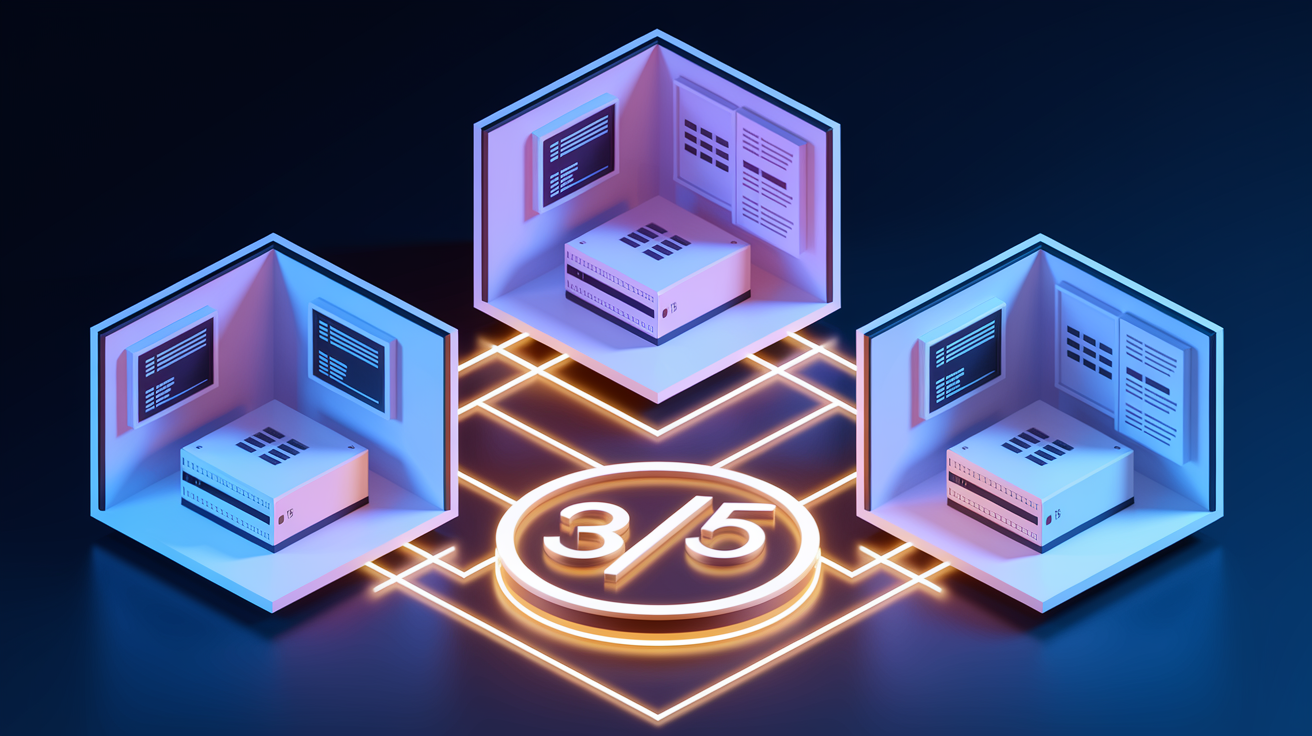
Standard Multisig Structures
A multisignature wallet requires more than one private key to authorize a transaction. In a 2 of 3 multisig setup, three keys exist but only two signatures are needed to spend funds. This structure lets one key be lost, stolen, or compromised without putting funds at risk. The remaining two keys can still authorize transactions and move assets to a new wallet. A 3 of 5 configuration raises the security bar further, requiring three out of five keys to sign. The extra redundancy protects against multiple simultaneous key losses or scenarios where two keyholders are compromised.
Multisig schemes are native to Bitcoin and supported by most major blockchains through smart contracts or protocol-level features. Each keyholder typically stores their key on a separate device, in a separate physical location, or under the control of a separate legal entity. A family might keep one key in a home safe, one with a trusted attorney, and one in a bank safety deposit box. A company treasury might distribute keys among the CFO, CEO, and an independent board member, requiring any two to approve spending. Multisig flexibility allows configurations that match organizational trust models, regulatory requirements, and operational workflows.
Operational Advantages of Multisig
Multisig removes single points of failure in both security and operational continuity. If one key is lost or one keyholder becomes unavailable, funds stay accessible through the other signers. If one key is compromised by theft or coercion, the attacker still can’t move funds unilaterally. They’d need to compromise additional keys held in separate locations or by separate parties. This makes multisig particularly valuable for high-net-worth individuals, family offices, and institutional treasuries where the stakes of loss or insider fraud are catastrophic.
Multisig also creates built-in accountability and governance. Every transaction leaves an auditable record of which keys signed, providing transparency for compliance, tax reporting, and internal controls. For businesses, multisig enforces separation of duties: no single employee can unilaterally move company funds. For estates and trusts, multisig ensures beneficiaries, executors, and legal advisors must coordinate to access inherited assets, reducing disputes and providing procedural safeguards. The operational overhead (coordinating multiple signers, managing key backups, configuring wallet software) is higher than single-key setups. But for meaningful sums, the added security and resilience justify the complexity.
Exchange Custody and Platform Security Considerations

Exchanges store user deposits in a mix of hot wallets (for immediate withdrawals) and cold wallets (for bulk reserves). When you deposit crypto to an exchange, you no longer control the private keys. The exchange does. Legally and technically, the funds are held by the exchange on your behalf. You must trust the platform’s security infrastructure, internal controls, and solvency. Exchange breaches have resulted in billions of dollars in losses. Attackers compromise hot wallet servers, exploit withdrawal systems, or steal credentials from employees with administrative access.
Exchange custody also introduces insolvency risk. If the platform mismanages reserves, engages in undisclosed lending, or suffers a catastrophic loss, user funds can be frozen or lost entirely. Bankruptcy proceedings in multiple jurisdictions have left customers waiting years for partial recoveries. Unlike bank deposits, most exchange balances carry no government insurance. A small number of platforms offer limited private insurance policies, but coverage is often capped far below the total assets on the platform and may exclude certain types of losses.
When evaluating an exchange for custodial storage, confirm these four security features:
- Cold storage allocation. The platform should disclose what percentage of user funds are held in offline cold wallets versus internet-connected hot wallets. A high cold storage ratio reduces the funds exposed to online attacks.
- Proof of reserves and third-party audits. Regular attestations by independent auditors verify that the exchange holds reserves matching user balances. Transparency reports and Merkle-tree proofs let users verify their balances are included without revealing other users’ data.
- Withdrawal controls and multisig authorization. Internal withdrawal processes should require multiple employees to approve large transfers, and cold wallet keys should be held in multisig configurations to prevent single-employee theft or coercion.
- Insurance and regulatory licensing. Licensed exchanges operating under financial regulatory frameworks face higher accountability and disclosure standards. Insurance policies (when present) should specify coverage limits, exclusions, and claims processes in clear terms.
Private Key Management and Operational Security

A seed phrase (typically 12 or 24 words) is the master key that can regenerate all private keys and addresses in a hierarchical deterministic wallet. Anyone who obtains your seed phrase can recreate your entire wallet on another device and transfer every asset you own. Treat the seed phrase like you’d treat gold bars or bearer bonds: physical possession equals ownership, and there’s no recourse once it’s stolen or lost.
Storing seed phrases digitally (in password managers, cloud storage, email drafts, or smartphone photos) exposes them to malware, cloud breaches, and service provider access. Hackers routinely scan cloud accounts for text files containing 12 or 24 word sequences matching BIP39 word lists. Even encrypted digital backups carry risk. If the encryption password is weak or reused, or if the encryption software is compromised, the seed is exposed. The safest practice is to store seed phrases offline, on physical media, in locations protected from both theft and physical disasters.
Physical backups face their own set of risks. A single paper copy stored at home is vulnerable to fire, flood, or burglary. Multiple copies in different locations reduce physical risk but increase the exposure surface. More copies mean more opportunities for accidental discovery or theft. Metal backups (engraved or stamped steel plates) withstand fire and water better than paper, but they’re not indestructible and still require secure storage. The ideal backup strategy distributes redundancy without concentrating excessive copies in easily accessible locations.
Five essential private key management rules:
- Never enter your seed phrase into any internet-connected device unless absolutely necessary. Initialize wallets offline, and use hardware wallets or air-gapped computers for any operation involving the seed.
- Store at least two physical backups in separate geographic locations. One at home in a fireproof safe and one in a bank safety deposit box, trusted family member’s location, or secure offsite facility.
- Use metal backups for high-value seed phrases. Engraved stainless steel or titanium plates resist fire, water, and corrosion far better than paper.
- Test your backups periodically. Perform dry run recovery exercises every 6 to 12 months to confirm backups are readable, complete, and correctly formatted. Discover missing words or illegible engravings before an emergency.
- Never photograph, screenshot, or digitally transcribe seed phrases unless using dedicated encryption hardware or air-gapped systems. Digital copies leave traces in caches, backups, and cloud sync logs that persist long after you believe they’re deleted.
Major Attack Vectors Targeting Crypto Holders
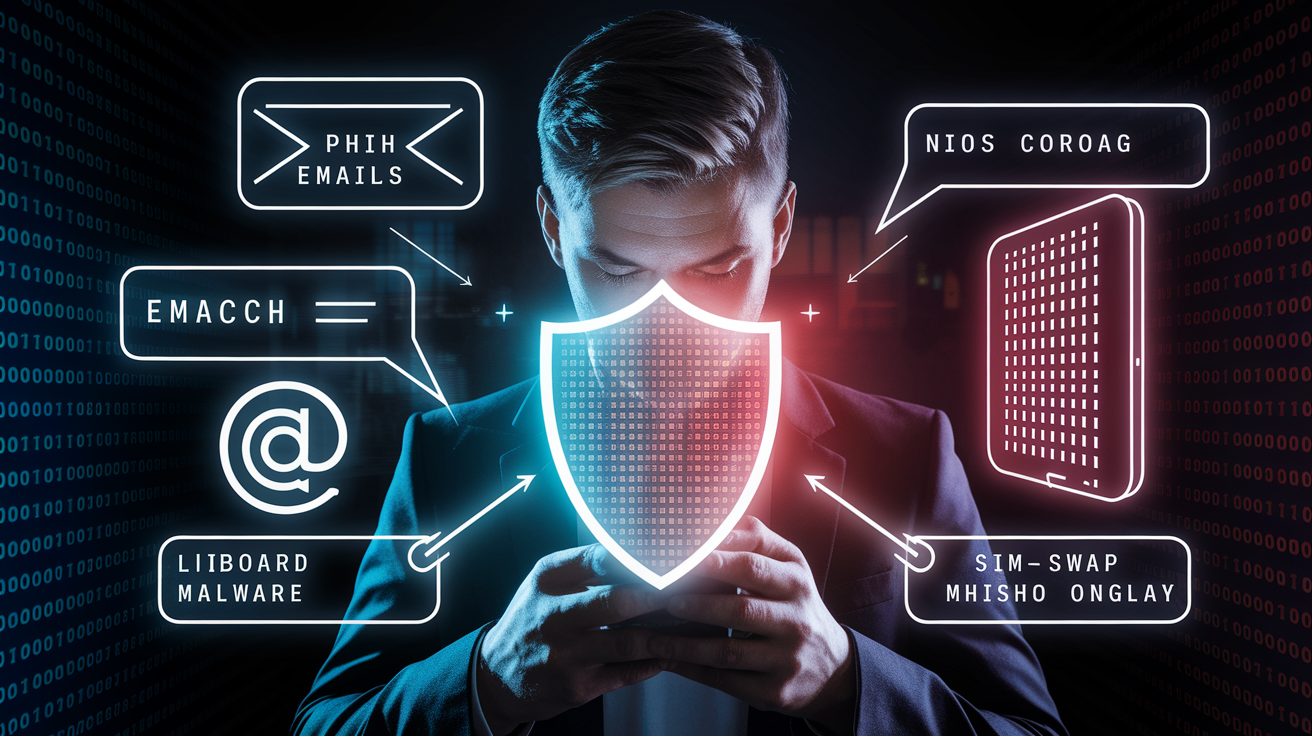
Cryptocurrency holders face a different threat landscape than traditional financial account owners. Transactions are irreversible. There’s no fraud department to call. Attackers know that a single successful compromise can yield enormous returns with near-zero recovery risk. Phishing, clipboard malware, SIM swap attacks, and social engineering schemes are the primary vectors used to steal private keys, seed phrases, and exchange credentials. Many of these attacks exploit human psychology rather than technical vulnerabilities. An attacker doesn’t need to break encryption if they can trick you into handing over your seed phrase.
Phishing campaigns impersonate wallet providers, exchanges, or blockchain projects, sending emails or text messages that direct victims to fake websites designed to capture seed phrases or passwords. Clipboard malware silently monitors your computer’s clipboard and replaces copied cryptocurrency addresses with attacker-controlled addresses. When you paste what you believe is your own deposit address, you’re actually pasting the attacker’s address, and the funds vanish the moment you hit send. SIM swap attacks involve social engineering mobile carriers to transfer a victim’s phone number to an attacker-controlled SIM card, letting the attacker intercept SMS-based two-factor authentication codes and gain access to exchange accounts or email. Sophisticated attackers also target institutional operators, deploying spear phishing campaigns against employees with access to hot wallet infrastructure or using supply chain attacks to compromise wallet software updates.
| Attack Type | Method | Prevention |
|---|---|---|
| Phishing | Fake websites and emails impersonate legitimate services to harvest seed phrases, passwords, or private keys. | Verify URLs manually, never click links in unsolicited messages, bookmark official sites, and use hardware wallets that confirm addresses on device. |
| Clipboard Malware | Malicious software monitors and replaces copied cryptocurrency addresses with attacker-controlled addresses. | Always verify the first and last characters of pasted addresses before confirming transactions. Use address whitelisting features when available. |
| SIM Swap | Attacker convinces mobile carrier to port victim’s phone number to a new SIM, intercepting SMS-based 2FA codes. | Use authenticator apps or hardware security keys for 2FA instead of SMS. Add a carrier-level PIN to prevent unauthorized SIM changes. |
| Social Engineering | Attacker impersonates support staff, authority figures, or trusted contacts to manipulate victims into revealing sensitive information. | Never share seed phrases or private keys with anyone, verify identities through independent channels, and ignore urgent requests that bypass normal procedures. |
| Supply Chain Compromise | Malicious code is injected into wallet software, browser extensions, or hardware during manufacturing or distribution. | Download software only from official sources, verify cryptographic signatures, use hardware wallets with tamper-evident packaging, and check for independent security audits. |
Practical Risk Mitigation Checklist
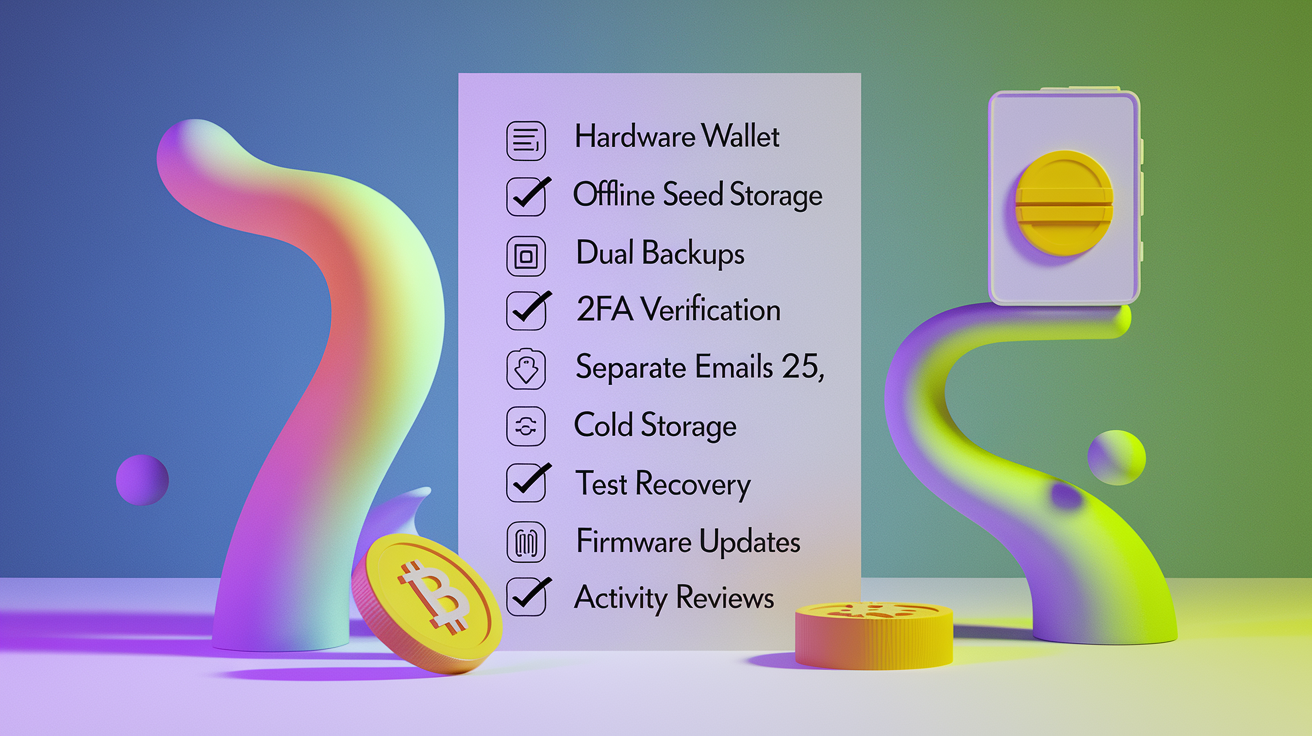
- Use a dedicated hardware wallet for any cryptocurrency holdings you don’t need to access daily. Keep the device offline when not in use.
- Generate and store seed phrases offline on physical media. Never type them into internet-connected devices, password managers, or cloud storage.
- Maintain at least two geographically separated physical backups of your seed phrase, stored in fireproof and waterproof containers or engraved on steel plates.
- Enable authenticator app based or hardware key based two-factor authentication on all exchange and wallet accounts. Disable SMS-based 2FA wherever possible.
- Manually verify every cryptocurrency address before sending funds. Confirm the first six and last six characters match. Never rely solely on clipboard contents.
- Use separate email addresses for cryptocurrency accounts. Don’t link these addresses to public social media profiles or use them for general web signups.
- Keep the majority of long-term holdings in cold storage or multisig wallets. Limit hot wallet balances to amounts you can afford to lose.
- Perform a test recovery at least once per year to confirm backups are complete, readable, and correctly formatted. Practice the full restoration process on a secondary device.
- Update wallet software and firmware regularly, but only download updates from official sources and verify cryptographic signatures before installation.
- Review account activity, withdrawal addresses, and API key permissions monthly. Immediately revoke any unrecognized access or suspicious activity.
Expert Case Studies on Custody Successes and Failures

The collapse of a major centralized exchange in 2022 resulted in over $8 billion in missing customer funds. Subsequent bankruptcy filings and investigations revealed that the platform had commingled customer deposits with company operating funds, used customer assets for risky proprietary trading, and failed to maintain adequate reserves. Users who held assets in custodial wallets on the platform had no direct access to private keys and no ability to withdraw funds once the platform froze operations. The absence of segregated accounts, independent audits, and proof of reserves disclosures allowed the mismanagement to continue for years. Customers faced lengthy bankruptcy proceedings, with most recovering only a fraction of their holdings. Many received nothing.
A smaller but equally instructive failure involved a DeFi protocol operator who stored all protocol treasury funds in a single hot wallet controlled by a 1 of 1 multisig (effectively a standard single key wallet). When a team member’s laptop was compromised by malware, the attacker gained access to the private key and drained the entire treasury in minutes. The protocol had no backup keys, no time delay on withdrawals, and no monitoring alerts configured for large transfers. The loss was permanent and irreversible. The post mortem analysis identified lack of multisig, absence of operational security training, and failure to separate treasury funds into cold and hot wallets as the root causes.
A family office managing mid-nine-figure cryptocurrency holdings successfully protected assets through multiple market downturns, exchange collapses, and targeted phishing campaigns. The custody structure used a 3 of 5 multisig wallet with keys distributed across three hardware wallets held in separate physical locations, one key held by an independent trustee, and one key held by a regulated institutional custodian under escrow. The setup required three signatures for any transaction, ensuring no single keyholder could unilaterally move funds and that the loss or compromise of two keys wouldn’t result in total asset loss. The family conducted quarterly recovery drills, rotated hardware devices every two years, and maintained detailed operational runbooks. Over a five year period, they experienced zero losses from theft, phishing, or key mismanagement. They successfully navigated two planned key rotations and one emergency recovery after a hardware wallet failure. The operational overhead (coordinating signers, scheduling transactions, maintaining documentation) was significant, but the resilience and peace of mind justified the cost.
You learned the core custody choices—self‑custody, third‑party custody, hardware wallets, cold storage, multisig, and the risks around exchanges.
We covered hardware wallet strengths, cold storage rules, private‑key handling, common attack methods, and a 10‑step safety checklist. Pick a setup that matches how you use crypto and practice the routines.
Use this featured guide to cryptocurrency custody and security as a playbook: follow the checklist, test your backups, and keep small amounts in hot wallets. Doable steps. Safer holdings.
FAQ
Q: What’s the safest way to store cryptocurrency?
A: The safest way to store cryptocurrency is cold self‑custody using hardware wallets or air‑gapped systems for long‑term, high‑value holdings, keeping seed backups offline and geographically separated.
Q: Self‑custody vs third‑party custody — which is better?
A: The tradeoff between self‑custody and third‑party custody is control versus convenience: self‑custody gives full key control and lower counterparty risk, while custodial services add ease and liquidity but increase insolvency and breach risks.
Q: What is a hardware wallet and why use one?
A: A hardware wallet is a device that stores private keys offline, reducing online attack surfaces; use one for long‑term holdings or frequent transactions where extra PIN, passphrase, and firmware provenance matter.
Q: How do cold storage and air‑gapped wallets work?
A: Cold storage and air‑gapped wallets work by isolating keys from internet‑connected devices entirely, often generated offline and stored on paper, metal, or isolated hardware; improper setup or backups can still create vulnerabilities.
Q: What is multisignature and when should I use it?
A: Multisignature is a setup requiring multiple independent keys to sign transactions; use it for team wallets, family offices, or high‑value stores to avoid single‑point failures and reduce internal fraud risk.
Q: Are exchanges safe for storing crypto long term?
A: Exchanges are suitable for trading and short‑term custody but pose risks like hacks, insolvency, and withdrawal freezes; avoid storing large, long‑term holdings on exchanges without independent backups.
Q: How should I back up my seed phrase?
A: You should back up your seed phrase by storing engraved steel or written copies in multiple, geographically separated, fire‑ and water‑resistant locations; never store seed phrases in cloud services or plain digital files.
Q: What are the main attack vectors to watch for?
A: The main attack vectors to watch for are phishing, clipboard malware, SIM‑swap, social‑engineering, and compromised updates; prevent them with hardware wallets, separate devices, strong passwords, and cautious link handling.
Q: What should I do immediately after a suspected compromise?
A: If you suspect a compromise, immediately move unaffected funds to secure cold or multisig wallets, revoke approvals, reset passwords, contact exchanges, and run a forensic check before using exposed devices again.
Q: How often should I audit my custody setup?
A: You should audit your custody setup quarterly, after major changes, and any time firmware or keyholders change; include test restores, redundant backups checks, and a review of access procedures.
Q: How do I choose the right hardware wallet?
A: You choose a hardware wallet by prioritizing manufacturer reputation, secure element and open security reviews, official firmware update paths, device provenance, and supported coins for your portfolio.
Q: What’s the best setup for everyday spending versus long‑term storage?
A: For everyday spending versus long‑term storage, use a small hot wallet for daily transactions and a hardware cold or multisig setup for long‑term, high‑value holdings with offline backups.
